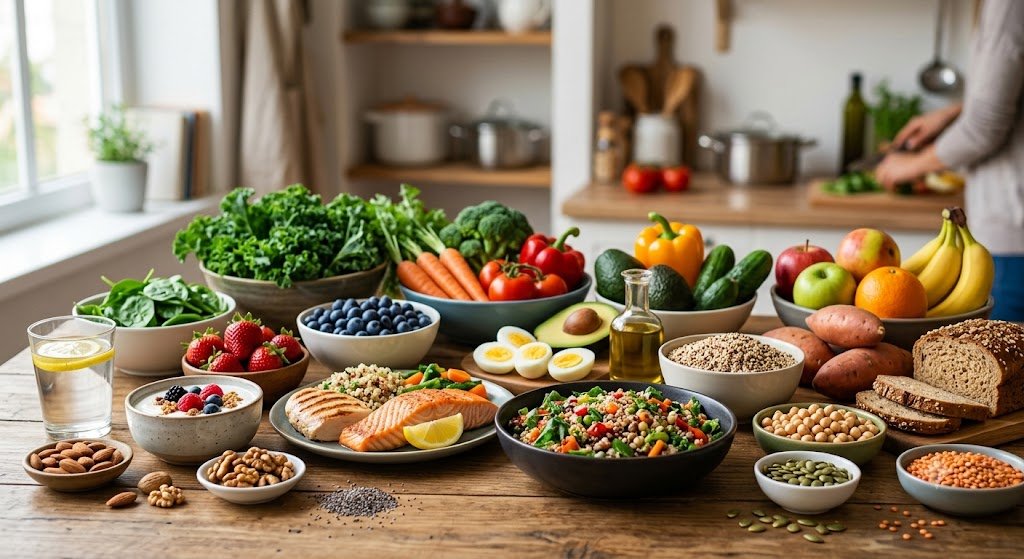
Good nutrition is one of the foundations of healthy growth, physical fitness, energy, immunity, and overall wellness. What we eat every day provides the protein, carbohydrates, healthy fats, vitamins, minerals, fibre, and other nutrients that our bodies need to function effectively.
However, healthy nutrition does not require following extreme diets or eliminating entire food groups. A sustainable approach focuses on eating a balanced and varied diet, choosing mostly nutrient-rich foods, staying physically active, getting adequate sleep, and maintaining healthy lifestyle habits.
The World Health Organization (WHO) describes four important principles of a healthy diet: adequacy, balance, moderation, and diversity. WHO also emphasizes minimally processed foods, vegetables, fruits, pulses, whole grains, nuts, and healthy protein sources while limiting excess salt, free sugars, unhealthy fats, and highly processed foods.
In this guide from NutritionalGrowth, we explore some of the best evidence-based nutrition tips you can use to support healthy growth, fitness, energy, and long-term wellness.
Why Is Good Nutrition Important?
Nutrition affects almost every major function of the human body.
A well-balanced diet helps provide nutrients required for:
- Healthy growth and development
- Muscle maintenance and repair
- Strong bones and teeth
- Energy production
- Normal immune function
- Brain and cognitive function
- Digestive health
- Healthy body-weight management
- Physical performance
- Long-term cardiovascular and metabolic health
WHO notes that healthy eating helps protect against malnutrition while also lowering the risk of several noncommunicable diseases, including cardiovascular disease, diabetes, stroke, and certain cancers.
The goal should therefore not be to find a single “superfood.” Healthy nutrition comes from your overall dietary pattern.
1. Build Your Meals Around a Balanced Diet
One of the simplest nutrition tips for better health is to create meals containing several food groups rather than relying heavily on one type of food.
A practical balanced meal may contain:
- Vegetables
- Fruits
- Whole grains or minimally processed carbohydrates
- Protein-rich foods
- Healthy fats
Harvard’s Healthy Eating Plate suggests making roughly half your meal vegetables and fruits, about one-quarter whole grains, and about one-quarter healthy protein sources.
For an Indian diet, this can easily include foods such as:
Vegetables: spinach, carrots, cauliflower, beans, cabbage, pumpkin, tomatoes, broccoli and local seasonal vegetables.
Whole grains and cereals: brown rice, oats, whole wheat, barley, millets, ragi, jowar and bajra.
Protein: dal, rajma, chana, lentils, soy foods, eggs, fish, chicken, milk, curd, paneer, nuts and seeds.
Healthy fats: nuts, seeds and appropriate amounts of vegetable oils.
India’s ICMR–National Institute of Nutrition also recommends dietary diversity and a balanced intake of cereals or millets, pulses or other protein foods, vegetables, fruits, nuts and seeds, dairy, and fats or oils.
Read the ICMR–NIN Dietary Guidelines for Indians
2. Eat Enough Protein for Growth and Fitness
Protein is particularly important for people interested in healthy growth, muscle fitness and recovery.
Proteins provide amino acids that the body uses to build and maintain muscles and other tissues. Protein-containing foods can also contribute important micronutrients.
Healthy protein choices include:
- Lentils
- Dal
- Chickpeas
- Rajma
- Soybeans and tofu
- Eggs
- Fish
- Chicken
- Milk
- Curd
- Paneer
- Peanuts
- Almonds
- Seeds
Instead of concentrating most of your protein into one large meal, many people find it practical to include a protein source at breakfast, lunch, snacks, and dinner.
For example:
Breakfast: eggs + whole-grain roti + vegetables
Lunch: rice + dal + vegetables + curd
Snack: fruit + nuts
Dinner: roti + paneer/chicken/fish + vegetables
Plant-based diets can also provide adequate protein when they contain a diverse combination of pulses, legumes, soy foods, nuts, seeds and grains.
Individual protein requirements differ according to age, body size, physical activity, training goals, pregnancy and medical conditions, so athletes or people with specific health goals may benefit from individualized guidance.
3. Eat More Fruits and Vegetables
Fruits and vegetables provide vitamins, minerals, fibre and numerous naturally occurring plant compounds.
WHO recommends that people older than 10 years aim for at least 400 grams of fruits and vegetables per day, while recommendations are lower for younger children.
An easy strategy is to eat fruits and vegetables of different colours.
Green
- Spinach
- Broccoli
- Beans
- Peas
- Cucumber
Orange and yellow
- Carrot
- Pumpkin
- Papaya
- Mango
- Orange
Red and purple
- Tomato
- Beetroot
- Berries
- Pomegranate
- Purple cabbage
Different fruits and vegetables provide different combinations of nutrients and plant compounds, which is why variety matters as much as quantity.
Whenever possible, choose whole fruit instead of relying heavily on fruit juice because whole fruit also provides fibre.
Learn more about fruits and vegetables from Harvard Nutrition Source
4. Choose High-Quality Carbohydrates
Carbohydrates are an important source of energy, particularly for active people.
But carbohydrate quality matters.
Healthy carbohydrate sources include:
- Oats
- Brown rice
- Whole wheat
- Millets
- Quinoa
- Barley
- Beans
- Lentils
- Vegetables
- Whole fruits
Highly refined carbohydrates such as pastries, sweets, sugary cereals, refined snacks and sugar-sweetened beverages generally contain less fibre and may provide large amounts of rapidly digestible carbohydrate.
Harvard’s Nutrition Source notes that whole grains retain the bran, germ and endosperm, while refining removes parts of the grain containing fibre and numerous nutrients.
Therefore, choosing whole or minimally processed grains more often than refined grains is a useful long-term strategy.
5. Include Enough Dietary Fibre
Dietary fibre is an important component of a healthy diet.
Fibre can support:
- Digestive health
- Regular bowel movements
- Fullness after meals
- Blood glucose regulation
- Cardiovascular health
Good fibre sources include:
- Oats
- Whole grains
- Lentils
- Chickpeas
- Beans
- Vegetables
- Fruits
- Nuts
- Seeds
WHO recommends at least 25 grams of naturally occurring dietary fibre per day for people over age 10, with lower targets for younger children.
Harvard notes that fibre occurs in many forms and recommends obtaining it through a wide range of plant foods rather than focusing on just one fibre source.
A simple way to increase fibre is to gradually add more vegetables, fruits, pulses and whole grains to your meals.
6. Don’t Be Afraid of Healthy Fats
Fat is an essential nutrient.
The important factor is the type of fat you consume.
Better sources include:
- Nuts
- Seeds
- Fish
- Groundnut
- Avocado
- Olive oil
- Sunflower oil
- Soybean oil and other appropriate plant oils
WHO recommends favouring unsaturated fats over saturated and trans fats. Industrially produced trans fats should be avoided.
Foods high in saturated fat should generally be consumed in moderation, while heavily fried and packaged foods should not become everyday staples.
Healthy fats can contribute to a balanced diet, but they are energy-dense, so portion size remains important.
7. Reduce Added and Free Sugars
Many foods marketed as convenient or refreshing can contain substantial quantities of added sugars.
Common sources include:
- Soft drinks
- Sweetened fruit drinks
- Packaged juices
- Sweets
- Cakes
- Biscuits
- Desserts
- Sweetened breakfast cereals
- Flavoured beverages
WHO recommends limiting free sugars to less than 10% of total daily energy intake, with further reduction potentially offering additional health benefits.
One of the easiest improvements is replacing sugary drinks with:
- Water
- Unsweetened tea
- Plain milk when appropriate
- Other low- or no-added-sugar beverages
Remember that honey, syrups and sugars naturally present in fruit juice also count toward free sugar intake under WHO’s definition.
8. Keep Salt Intake Under Control
Your body requires sodium, but excessive sodium intake can contribute to elevated blood pressure.
WHO recommends adults consume less than 5 grams of salt per day, equivalent to under 2 grams of sodium.
Large amounts of sodium can come from:
- Packaged snacks
- Pickles
- Instant noodles
- Processed meats
- Ready-to-eat meals
- Sauces
- Restaurant food
- Salt added during cooking
You can gradually reduce salt while increasing flavour with:
- Lemon
- Garlic
- Ginger
- Coriander
- Black pepper
- Herbs
- Spices
Taste preferences can adapt over time.
9. Make Water Your Main Drink
Hydration is important for normal physiological function and becomes especially relevant during exercise, hot weather, illness and prolonged physical activity.
Water is usually the simplest everyday hydration choice.
Try these habits:
- Drink water throughout the day.
- Carry a reusable water bottle.
- Drink before, during and after exercise when needed.
- Eat water-rich foods such as fruits and vegetables.
- Increase fluid intake during hot weather or heavy sweating.
There is no single amount of water that is ideal for every individual because requirements vary according to body size, climate, activity, food intake and health status.
Instead of forcing yourself to follow an arbitrary number of glasses, pay attention to hydration throughout the day and increase fluids when conditions require it.
10. Eat More Minimally Processed Foods
Nutrition does not need to become complicated.
One useful rule is to make whole and minimally processed foods the foundation of your diet.
Examples include:
- Fresh vegetables
- Fruits
- Pulses
- Lentils
- Whole grains
- Eggs
- Fish
- Milk and curd
- Nuts and seeds
WHO notes that diets containing significant amounts of highly processed foods — which may be high in sodium, free sugars or unhealthy fats — are associated with negative health outcomes.
This does not mean you must completely avoid every packaged food.
Instead, think in terms of frequency.
A sweet, dessert or packaged snack occasionally is very different from making ultra-processed foods the foundation of your daily diet.
11. Don’t Ignore Vitamins and Minerals
Micronutrients are required in smaller quantities than protein, carbohydrates and fats, but they still play essential roles in health.
Important micronutrients include:
Calcium
Important for bone health and normal muscle and nerve function.
Food sources can include:
- Milk
- Curd
- Paneer
- Ragi
- Sesame seeds
- Certain leafy vegetables
Iron
Iron contributes to normal oxygen transport in the body.
Sources include:
- Lentils
- Beans
- Green leafy vegetables
- Meat
- Eggs
- Fortified foods
Vitamin C
Found in foods such as:
- Amla
- Guava
- Oranges
- Lemons
- Peppers
- Tomatoes
Vitamin B12
Naturally found primarily in animal-derived foods and some fortified foods.
People following strict vegan diets may need particular attention to vitamin B12.
Vitamin D
Vitamin D is important for several physiological processes including bone health.
People with suspected nutrient deficiencies should not rely solely on internet advice or supplements. Laboratory testing and professional guidance may be appropriate depending on the individual.
12. Combine Nutrition With Regular Exercise
Good nutrition and physical activity work together.
Exercise can support:
- Cardiovascular fitness
- Muscular strength
- Mobility
- Bone health
- Weight management
- Mental well-being
For adults, the CDC recommends at least 150 minutes of moderate-intensity aerobic activity per week, or an equivalent amount of vigorous activity, along with muscle-strengthening activity on at least two days each week.
Examples include:
- Walking
- Jogging
- Cycling
- Swimming
- Strength training
- Yoga
- Sports
- Bodyweight exercise
You do not need to complete your entire weekly target at once. Physical activity can be divided throughout the week.
Read the CDC physical activity recommendations for adults
13. Eat Properly Around Your Workouts
Nutrition can influence workout performance and recovery.
Before exercise
Depending on timing and individual tolerance, a meal or snack containing carbohydrates and some protein can be useful.
Examples:
- Banana + curd
- Oats + milk
- Whole-grain toast + egg
- Fruit + yoghurt
After exercise
A balanced post-workout meal can include protein, carbohydrates and fluids.
Examples:
- Rice + dal + vegetables
- Roti + paneer + vegetables
- Rice + chicken + salad
- Eggs + whole-grain bread + fruit
- Curd + fruit + oats
You do not need expensive fitness foods to eat well around workouts.
Normal nutritious foods can meet the needs of many recreationally active people.
Competitive athletes and people training at high intensity may require more individualized sports-nutrition planning.
14. Prioritize Sleep and Recovery
Nutrition and exercise receive a lot of attention, but recovery is equally important.
Sleep supports multiple aspects of physical and mental health.
According to the CDC, adults aged 18–60 generally need at least seven hours of sleep per night, although needs vary by age.
Teenagers generally require more sleep than adults.
Healthy sleep habits include:
- Keeping a regular sleep schedule
- Reducing late-night screen exposure
- Keeping the bedroom dark and comfortable
- Avoiding very heavy meals just before bedtime if they disturb sleep
- Managing caffeine intake later in the day
Nutrition, training and sleep should be viewed as parts of the same wellness system.
15. Focus on Consistency Instead of Extreme Diets
A sustainable diet usually produces better long-term habits than repeatedly following very restrictive plans.
You do not need to:
- Completely avoid carbohydrates
- Eat only salads
- Survive on juices
- Skip meals unnecessarily
- Purchase expensive supplements
- Remove every food you enjoy
Instead, focus on what you do most of the time.
For example:
If most of your meals contain vegetables, protein, whole-food carbohydrates and appropriate healthy fats, an occasional dessert is unlikely to define your overall diet.
The goal is not perfection.
The goal is creating eating habits you can realistically maintain for years.
16. Eat According to Your Individual Needs
There is no single perfect diet that works identically for everyone.
Nutrition needs vary according to:
- Age
- Sex
- Height and body composition
- Physical activity
- Fitness goals
- Pregnancy
- Health conditions
- Food availability
- Cultural preferences
- Dietary restrictions
WHO similarly notes that the exact composition of a healthy diet varies according to factors such as age, lifestyle, physical activity, culture and locally available foods.
This means healthy eating can include Indian, Asian, Mediterranean, vegetarian, non-vegetarian and many other traditional dietary patterns.
What matters most is the overall quality and balance of the diet.
Simple Indian Balanced Diet Example
Here is a practical example of how nutritious foods can be distributed throughout the day.
Breakfast
- Vegetable oats/upma/poha
- Eggs or curd
- One fruit
OR
- Whole-wheat roti
- Paneer/egg bhurji
- Vegetables
Mid-Morning Snack
- Guava/apple/orange/papaya
- Small portion of nuts
Lunch
- Rice or roti
- Dal
- Seasonal vegetables
- Salad
- Curd
- Egg/fish/chicken/paneer depending on preference
Evening Snack
- Roasted chana
- Fruit
- Nuts
- Unsweetened tea or coffee
Dinner
- Roti or rice
- Dal/paneer/egg/fish/chicken
- Plenty of vegetables
Individual portions should be adjusted to energy requirements and health goals.
Best Foods for Healthy Growth and Fitness
A useful grocery list can include:
Protein Foods
- Eggs
- Lentils
- Dal
- Rajma
- Chickpeas
- Soybeans
- Tofu
- Paneer
- Milk
- Curd
- Fish
- Chicken
Healthy Carbohydrates
- Oats
- Brown rice
- Whole wheat
- Millets
- Ragi
- Jowar
- Bajra
- Potatoes and sweet potatoes as part of a balanced diet
Vegetables
- Spinach
- Carrot
- Beans
- Broccoli
- Pumpkin
- Cabbage
- Tomato
- Cauliflower
- Seasonal vegetables
Fruits
- Banana
- Apple
- Orange
- Guava
- Papaya
- Pomegranate
- Berries where available
- Seasonal local fruits
Healthy Fat Sources
- Peanuts
- Almonds
- Walnuts
- Sesame seeds
- Flaxseeds
- Chia seeds
- Other nuts and seeds
Eating locally available seasonal foods can often be nutritious, affordable and easier to maintain.
Nutrition Mistakes to Avoid
Even people trying to eat healthily can make some common mistakes.
1. Skipping vegetables
Protein alone does not make a balanced diet.
2. Drinking too many calories
Soft drinks, sweetened beverages and some packaged juices can contribute significant free sugars.
3. Depending heavily on supplements
Supplements should not automatically replace a balanced diet.
4. Eliminating carbohydrates completely
Healthy carbohydrate-rich foods can provide energy, fibre, vitamins and minerals.
5. Eating very little while exercising heavily
Adequate nutrition is necessary for performance and recovery.
6. Ignoring sleep
Your wellness routine should include nutrition, physical activity and recovery.
7. Following every social-media diet trend
Nutrition advice should ideally be based on credible scientific evidence rather than viral claims.
Frequently Asked Questions About Nutrition and Healthy Growth
What is the best diet for healthy growth?
A balanced diet containing vegetables, fruits, whole grains, pulses or other quality protein foods, healthy fats, and adequate micronutrients can support normal growth and health.
Children and adolescents have different nutritional requirements from adults, so age-appropriate nutrition is particularly important during periods of growth.
What foods help muscle growth?
Foods containing quality protein can support muscle repair and growth when combined with appropriate resistance training.
Examples include:
- Eggs
- Milk
- Curd
- Paneer
- Fish
- Chicken
- Lentils
- Chickpeas
- Rajma
- Soy foods
- Nuts and seeds
Adequate total food and energy intake also matters.
What should I eat every day to stay healthy?
Try to regularly include:
- Vegetables
- Whole fruits
- Whole grains
- Pulses or another quality protein source
- Nuts and seeds
- Appropriate healthy fats
- Water
Variety across the week is important.
Is protein powder necessary for fitness?
No.
Many people can obtain sufficient protein through normal foods.
Protein supplements may be convenient for some individuals, particularly athletes or people struggling to meet protein requirements through food, but they are not automatically necessary for everyone.
Are carbohydrates bad for fitness?
No.
Carbohydrates are an important energy source.
The better strategy is usually to choose high-quality carbohydrates such as whole grains, fruits, vegetables and legumes more often than refined and heavily processed carbohydrate foods.
How much fruit and vegetables should I eat?
WHO recommends at least 400 grams per day for people over 10 years of age, with lower age-specific recommendations for younger children.
Aim for variety rather than eating the same fruit or vegetable every day.
What is the healthiest drink?
For everyday hydration, water is generally an excellent choice.
Unsweetened tea and other low-sugar beverages can also fit into a healthy eating pattern.
Final Thoughts
The best nutrition strategy is not a complicated detox, extreme diet or expensive supplement routine.
Healthy nutrition starts with simple habits:
Eat a variety of whole and minimally processed foods.
Fill your meals with vegetables and fruits.
Include quality protein regularly.
Choose whole grains and fibre-rich carbohydrates.
Include healthy fats in appropriate amounts.
Limit excessive sugar, salt and highly processed foods.
Stay physically active.
Drink enough fluids.
Get adequate sleep.
Most importantly, focus on habits you can maintain consistently.
Good nutrition is not about eating perfectly every day. It is about creating a dietary pattern that provides your body with the nutrients it needs for healthy growth, fitness, energy, performance and overall wellness.
At NutritionalGrowth, our goal is to make nutrition easier to understand so you can make informed, practical choices for a healthier lifestyle.
Trusted Nutrition Resources
For readers who want to learn more from established health and nutrition organizations:
ICMR–National Institute of Nutrition
CDC Physical Activity Guidelines