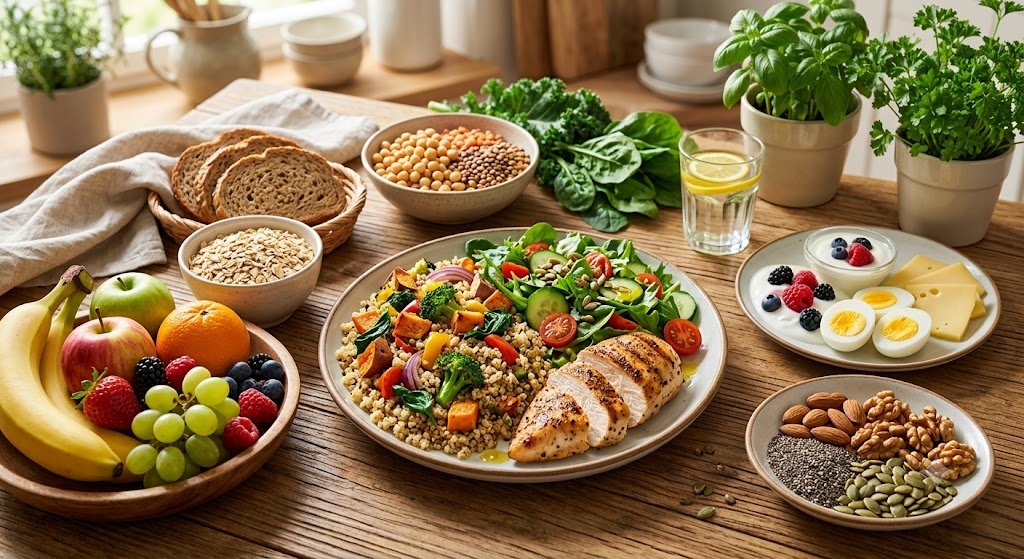
A balanced diet is not about following a complicated meal plan, eliminating entire food groups, or eating “perfectly” every day. At its simplest, it means eating a variety of foods that provide the energy and nutrients your body needs while keeping foods high in salt, free sugars, and less-healthful fats in moderation.
For beginners, understanding what a balanced diet is can make healthy eating much easier. Instead of concentrating on individual “superfoods,” it is generally more useful to look at your overall eating pattern: vegetables and fruits, whole grains, protein-rich foods, healthy fats, adequate fluids, and variety.
This beginner-friendly guide explains the basic principles of balanced nutrition, the major food groups, how to build a balanced plate, and practical ways to develop healthier eating habits.
Important: This article provides general nutrition information and is not a substitute for personalized medical or dietary advice. People with medical conditions, allergies, pregnancy-related nutritional needs, eating disorders, or other special dietary requirements should seek guidance from an appropriately qualified healthcare professional.
What Is a Balanced Diet
A balanced diet is an eating pattern that provides a variety of foods in appropriate proportions so that the body receives sufficient energy, protein, carbohydrates, fats, fibre, vitamins, minerals, and other nutrients.
The exact composition of a healthy diet is not identical for everyone. Age, activity level, culture, locally available foods, dietary preferences, and individual health needs can all influence what an appropriate diet looks like.
The World Health Organization emphasizes variety and recommends a diet containing foods such as vegetables, fruits, legumes, nuts, and whole grains, while limiting free sugars, salt, saturated fat, and trans fat.
The key word is balance.
You do not necessarily need to achieve a perfect balance at every individual meal. Your overall food choices across the day and week matter too.
Why Is a Balanced Diet Important
Food provides much more than calories.
Different foods supply different combinations of macronutrients and micronutrients that the body requires for normal functions. This is one reason eating a variety of foods is generally preferable to relying heavily on only a few foods.
A balanced eating pattern can help provide:
- Energy for everyday activities
- Protein needed for normal growth and tissue maintenance
- Dietary fibre
- Essential vitamins and minerals
- Essential fatty acids
- Nutrients needed for normal body functions
According to the World Health Organization, healthy dietary patterns are an important foundation for health and well-being.
A useful goal, therefore, is not to search for one food that will “make you healthy,” but to develop an overall eating pattern that is varied, practical, and sustainable.
What Are the Main Components of a Balanced Diet
There is no single food that contains everything everyone needs in ideal amounts. Building a balanced diet therefore involves combining foods from several nutritional groups.
Let’s look at the major components.
1. Vegetables and Fruits
Vegetables and fruits are important sources of:
- Dietary fibre
- Vitamins
- Minerals
- Various naturally occurring plant compounds
WHO recommends that adults and children over 10 aim for at least 400 grams of vegetables and fruits per day.
Variety is useful because different fruits and vegetables provide different nutrients.
Instead of eating the same vegetables every day, rotate your choices.
For example:
Vegetables: spinach, carrots, tomatoes, broccoli, cauliflower, cucumber, pumpkin, beans, peas, capsicum and leafy greens.
Fruits: apples, bananas, oranges, guava, papaya, berries, pomegranate, mango and other seasonal fruits.
Fresh produce is not the only option. Depending on the product and preparation, frozen and canned vegetables and fruits can also contribute to a balanced diet.
Beginner tip: Try adding at least one vegetable or fruit to meals where you currently have none.
2. Whole Grains and Other High-Fibre Carbohydrate Foods
Carbohydrates are an important source of dietary energy, but the type and quality of carbohydrate matters.
Whole grains generally retain more of the grain’s original components than highly refined grains and can provide fibre along with various micronutrients.
Examples include:
- Oats
- Brown rice
- Whole-wheat roti
- Whole-grain bread
- Barley
- Millet
- Quinoa
- Other minimally processed grains
This doesn’t mean you can never eat white rice or white bread. A balanced diet does not have to operate on an “allowed versus forbidden” system.
Instead, make higher-fibre and whole-grain options a regular part of your overall diet where practical.
3. Protein-Rich Foods
Protein is required for normal growth, maintenance, and repair of body tissues.
Both animal and plant foods can provide protein.
Animal protein sources
Examples include:
- Eggs
- Fish
- Chicken and other poultry
- Milk
- Yogurt
- Paneer and other dairy foods
- Lean meats
Plant protein sources
Examples include:
- Lentils
- Chickpeas
- Rajma
- Beans
- Peas
- Soy foods
- Tofu
- Nuts
- Seeds
Beans, lentils, chickpeas and other pulses are particularly useful because they can provide both protein and fibre.
Vegetarians can build a nutritionally balanced diet without meat by consuming an appropriate variety of plant proteins and other nutrient-rich foods.
4. Healthy Sources of Fat
Fat is an essential component of the diet. The goal is not to eliminate all fat but to consider both the amount and type of fat consumed.
Unsaturated fats can be obtained from foods such as:
- Nuts
- Seeds
- Avocado
- Fish
- Olive oil
- Canola oil
- Other appropriate plant oils
WHO recommends shifting dietary fat away from saturated and trans fats toward unsaturated fats and advises limiting industrially produced trans fats.
Foods containing high amounts of saturated fat should generally be consumed with greater moderation as part of the overall dietary pattern.
Remember that fats are energy-dense, so portion size still matters.
5. Dairy Foods and Alternatives
Milk, yogurt and other dairy foods can provide nutrients including protein and calcium.
Depending on your diet, options may include:
- Milk
- Plain yogurt
- Curd
- Paneer
- Cheese in appropriate amounts
People who do not consume dairy may use alternatives such as fortified soy products or other suitable fortified alternatives.
When choosing plant-based alternatives, check the nutrition label because products can differ substantially in their protein, calcium, vitamin content and added sugar.
6. Water and Hydration
Healthy eating also includes adequate hydration.
Water is usually an excellent everyday beverage because it hydrates without adding free sugars or unnecessary calories.
Your fluid needs can vary depending on:
- Climate
- Physical activity
- Age
- Pregnancy or breastfeeding
- Diet
- Individual health circumstances
In hot climates or during physical activity, fluid requirements may increase.
Instead of depending heavily on sugary beverages, make water your primary drink whenever possible.
What Does a Balanced Plate Look Like
One of the easiest ways for beginners to understand balanced eating is to visualize their plate.
A practical model inspired by established healthy-eating frameworks is:
Approximately half the plate:
Vegetables and fruits
Aim for plenty of vegetables and include variety.
Approximately one-quarter:
Whole grains or other high-quality carbohydrate foods
Examples include brown rice, whole-wheat roti, oats, millet or other whole grains.
Approximately one-quarter:
Protein-rich foods
Examples include dal, beans, chickpeas, eggs, fish, chicken, tofu or other protein sources.
Then include appropriate amounts of healthy fats and choose water or another low-sugar beverage.
This is a general visual guide rather than an individualized prescription. Your exact portions depend on your nutritional and energy requirements.
An Example of a Balanced Indian Meal
Balanced nutrition does not require expensive imported “health foods.”
Traditional Indian foods can easily form the basis of nutritious meals.
For example:
Whole-wheat roti + dal + mixed vegetable sabzi + salad + plain curd
This meal provides a combination of carbohydrates, plant protein, fibre, vegetables and dairy.
Another example could be:
Brown rice + rajma + mixed vegetables + cucumber salad + curd
A non-vegetarian option could be:
Roti or rice + grilled fish/chicken + dal + cooked vegetables + salad
The goal is not to copy one meal every day. Use the principle to create variety based on your preferences, culture, availability and budget.
How Much Fruit and Vegetables Should You Eat
The World Health Organization recommends at least 400 grams of vegetables and fruits per day for adults and children over 10.
Another commonly used public-health message is approximately five portions per day.
Rather than becoming overly concerned about counting every gram, beginners can start by increasing the amount and variety of vegetables and fruits they eat throughout the day.
For example:
Breakfast: Add a banana or another fruit.
Lunch: Include salad and cooked vegetables.
Snack: Choose fruit instead of a highly processed snack some of the time.
Dinner: Make vegetables a substantial part of the meal.
Small changes can make a balanced eating pattern easier to maintain.
How Much Sugar Should You Have
One common mistake is assuming that all sources of sugar are nutritionally equivalent.
WHO’s recommendation specifically addresses free sugars, which include sugars added to foods and beverages as well as sugars naturally present in honey, syrups, fruit juices and fruit-juice concentrates.
WHO recommends keeping free sugars below 10% of total daily energy intake, with a further reduction below 5% offering additional health benefits.
Common sources of free or added sugars can include:
- Soft drinks
- Sweetened beverages
- Sweets
- Cakes
- Biscuits
- Desserts
- Sweetened breakfast cereals
- Sweetened tea or coffee
- Some packaged foods
You do not necessarily need to remove every sweet food permanently. Frequency, quantity, and your overall dietary pattern matter.
How Much Salt Is Too Much
Salt is another area where moderation matters.
WHO recommends that adults consume less than 5 grams of salt per day, equivalent to less than approximately one teaspoon from all sources combined.
Remember that salt does not only come from the salt shaker.
It may also be present in:
- Packaged snacks
- Sauces
- Pickles
- Instant foods
- Processed meats
- Restaurant foods
- Ready-made meals
Reading nutrition labels can help you understand how much sodium packaged foods contain.
Are Carbohydrates Bad for You
No. Carbohydrates are not inherently “bad.”
Foods such as whole grains, vegetables, fruits, beans and lentils all contain carbohydrates while also providing useful nutrients.
The more useful question is:
What type of carbohydrate am I eating
A diet dominated by sugary beverages and highly refined foods is nutritionally very different from one containing vegetables, legumes, fruits and whole grains.
For beginners, focus more on carbohydrate quality than trying to eliminate carbohydrates altogether.
Is Fat Bad for You
Fat is also not inherently bad.
Your body needs dietary fat, and foods containing unsaturated fats can form part of a balanced eating pattern.
However, different types of fats have different health implications.
WHO recommends replacing saturated and trans fats with unsaturated fats where possible and eliminating industrially produced trans fats from the diet.
So instead of thinking:
“Fat = unhealthy”
think:
“What type of fat, how much, and what is my overall eating pattern?”
Do You Need to Count Calories to Eat a Balanced Diet
Not necessarily.
Calories describe the amount of energy provided by food, and energy balance matters. But many people can improve their diet quality without calculating the calorie content of every meal.
Beginners may find it more practical to focus first on:
- Eating more vegetables and fruits
- Choosing whole grains more often
- Including protein-rich foods
- Drinking mostly water
- Reducing sugary drinks
- Watching portion sizes
- Eating fewer highly processed foods
- Developing regular eating habits
Some people may need more precise energy or nutrient guidance for specific goals or medical reasons. In those situations, individualized advice from a qualified professional can be appropriate.
Balanced Diet vs Restrictive Diet: What’s the Difference
A balanced diet emphasizes variety, adequacy, proportionality and sustainability.
Highly restrictive diets may remove foods or entire food groups without a medical or nutritional reason.
Unless you have a diagnosed allergy, intolerance, medical condition, ethical dietary preference or other legitimate reason, unnecessarily removing entire food groups can make obtaining certain nutrients more difficult.
Healthy eating should ideally be something you can maintain.
A diet that looks “perfect” for three days but is impossible to continue may be less useful than sustainable improvements you can follow for years.
10 Simple Healthy Eating Tips for Beginners
If you’re just starting your healthy-eating journey, avoid trying to transform your entire diet overnight.
Start with practical changes:
- Include vegetables in your main meals.
- Eat a variety of fruits rather than relying on juice.
- Choose whole grains more often.
- Include a protein source with your main meals.
- Add beans, lentils or chickpeas regularly.
- Choose water instead of sugary drinks more frequently.
- Keep highly processed snacks as occasional rather than staple foods.
- Pay attention to portion sizes.
- Read food labels when buying packaged products.
- Focus on consistency rather than perfection.
These habits are generally easier to sustain than extreme dietary rules.
Common Balanced-Diet Mistakes Beginners Make
Mistake 1: Eliminating carbohydrates
You don’t need to automatically remove rice, roti, fruit or other carbohydrate-containing foods. Focus on quality, variety and portions.
Mistake 2: Thinking healthy food must be expensive
Dal, beans, seasonal vegetables, eggs, oats, whole grains and locally available fruits can all contribute to nutritious meals.
Mistake 3: Drinking your calories
Sugary beverages can add substantial free sugar without providing the same experience as eating whole foods.
Water is generally a better everyday choice.
Mistake 4: Depending on supplements instead of food
Supplements may be useful in particular circumstances, but they should not automatically be treated as a replacement for a varied diet.
Mistake 5: Following every social-media diet trend
Nutrition advice online varies enormously in quality.
Look for information based on established evidence and credible health organizations rather than dramatic claims such as “detox your body in seven days” or “never eat this food again.”
Mistake 6: Expecting perfection
One meal does not define your overall diet.
What you eat consistently over time matters more than occasional deviations.
How to Start Eating a Balanced Diet Today
You don’t need to completely redesign your kitchen tomorrow.
Try this simple approach.
Week 1: Improve your plate
Add vegetables to lunch and dinner.
Week 2: Improve your drinks
Replace some sugary drinks with water.
Week 3: Improve your grains
Choose whole-grain or higher-fibre options more frequently.
Week 4: Improve your protein variety
Experiment with lentils, beans, chickpeas, eggs, fish, tofu or other protein-rich foods.
Week 5: Improve your snacks
Keep fruit, yogurt, nuts or other nutrient-rich options available.
Gradual changes can make healthy eating feel like a normal part of life rather than a temporary “diet.”
A Simple One-Day Balanced Diet Example
Here is a general example to illustrate the principles—not a personalized meal plan.
Breakfast
Oats prepared with milk or an appropriate alternative, topped with banana and a small portion of nuts.
Mid-Morning
A piece of seasonal fruit.
Lunch
Whole-wheat roti or brown rice, dal, mixed vegetables, salad and plain curd.
Afternoon
Roasted chickpeas or another suitable nutrient-rich snack.
Dinner
Roti or rice with vegetables and a protein source such as dal, beans, tofu, egg, fish or chicken.
Drinks
Water throughout the day according to thirst and individual requirements.
The quantities should be adapted to the individual rather than copied universally.
Frequently Asked Questions About a Balanced Diet
What is a balanced diet in simple words
A balanced diet is an eating pattern that includes a variety of foods in appropriate proportions to provide the energy and nutrients your body needs.
What are the main foods in a balanced diet
A healthy eating pattern generally includes vegetables, fruits, whole grains or other high-fibre carbohydrate foods, protein-rich foods, appropriate sources of healthy fats, and sufficient fluids.
Can rice be part of a balanced diet
Yes. Rice can be part of a balanced diet. Consider the portion, the type of rice, what you eat with it, and your overall dietary pattern. Whole-grain varieties can provide more fibre than refined varieties.
Can vegetarians eat a balanced diet
Yes. A well-planned vegetarian diet can include protein from lentils, beans, chickpeas, soy foods, nuts, seeds, dairy or alternatives, along with vegetables, fruits and grains. Individual nutrient requirements still need to be considered.
Is fruit sugar unhealthy
Whole fruit contains naturally occurring sugars along with fibre and various nutrients. WHO’s limits on free sugars are different from the sugars naturally contained within intact fresh fruits.
Do I need supplements for a balanced diet
Not everyone requires the same supplements. Requirements depend on diet, age, life stage, health status and possible deficiencies. Seek qualified medical or dietetic advice if you think you may need supplementation.
Is a balanced diet good for weight management
A nutritious, appropriately portioned dietary pattern can be part of healthy weight management, but body weight is influenced by multiple factors. Avoid diets promising unusually rapid or guaranteed weight loss.
Final Thoughts
Understanding what a balanced diet is does not need to be complicated.
Start with variety.
Eat plenty of vegetables and fruits. Choose whole grains and other high-fibre foods more often. Include appropriate protein sources. Choose healthier sources of fat. Drink mostly water. Limit excessive salt, free sugars and foods high in saturated or trans fats.
Most importantly, build habits you can realistically maintain.
Healthy eating is not about making every meal perfect. It is about creating an overall dietary pattern that provides adequate nutrition and works with your lifestyle, culture, preferences and individual needs.
Continue exploring Nutritional Growth for practical guides on balanced nutrition, protein-rich foods, healthy eating habits, fitness nutrition and everyday wellness.
Authoritative External Resources
World Health Organization – Healthy Diet
https://www.who.int/health-topics/healthy-diet
WHO India – Healthy Diet
https://www.who.int/india/health-topics/healthy-diet
NHS – Eating a Balanced Diet
https://www.nhs.uk/live-well/eat-well/how-to-eat-a-balanced-diet/eating-a-balanced-diet/
NHS – The Eatwell Guide
https://www.nhs.uk/live-well/eat-well/food-guidelines-and-food-labels/the-eatwell-guide/
Harvard Health – Healthy Eating Plate
https://www.health.harvard.edu/blog/harvard-to-usda-check-out-the-healthy-eating-plate-201109143344