NutritionalGrowth – Healthy Eating, Diet Plans & Wellness Tips
Healthy living does not have to begin with an extreme diet, expensive supplements or complicated meal plans. In most cases, sustainable wellness starts with something much simpler: understanding what your body needs, choosing nutritious foods regularly and developing healthy habits that you can maintain over time.
At NutritionalGrowth, our aim is to make nutrition easier to understand. From balanced diets and healthy eating habits to protein, fitness nutrition, weight management and everyday wellness, we provide practical information designed to help readers make more informed food and lifestyle choices.
Modern lifestyles can make healthy eating challenging. Busy schedules, convenience foods, irregular meals and confusing nutrition information can all influence the way we eat.
However, building a healthier lifestyle does not require perfection.
It requires consistency.
This guide explores the foundations of healthy eating, balanced diet plans and wellness, based on practical nutrition principles and evidence-informed recommendations.
What Does Healthy Eating Really Mean?
Healthy eating is not about completely eliminating carbohydrates, avoiding every favourite food or following the latest social-media diet trend.
A healthy diet provides the body with sufficient energy and essential nutrients while maintaining variety, balance and moderation.
The World Health Organization describes four fundamental principles of a healthy diet:
- Adequacy
- Balance
- Moderation
- Diversity
A healthy dietary pattern generally includes vegetables, fruits, whole grains, pulses, nuts, seeds and suitable sources of protein while limiting foods that contain excessive salt, free sugars and unhealthy fats.
Healthy eating should also reflect an individual’s age, activity level, lifestyle, culture and nutritional requirements.
That means there is no single perfect diet for everyone.
A student, office worker, athlete, pregnant woman, growing child and older adult can have very different nutritional needs.
Why Balanced Nutrition Matters
Food provides much more than calories.
Our bodies require nutrients for everyday processes involving:
- Growth and development
- Muscle maintenance
- Energy production
- Brain function
- Immune function
- Bone health
- Hormone production
- Tissue repair
- Digestive health
- Normal metabolic processes
A balanced diet helps provide a combination of macronutrients and micronutrients.
Macronutrients
Macronutrients are required in relatively larger quantities.
They include:
Carbohydrates – an important source of energy.
Protein – supports the growth, maintenance and repair of body tissues.
Fats – supply energy and include essential fatty acids while supporting several physiological functions.
Micronutrients
Vitamins and minerals are required in smaller amounts but remain essential for normal body functions.
Examples include:
- Iron
- Calcium
- Zinc
- Vitamin A
- Vitamin C
- Vitamin D
- Vitamin B12
- Folate
- Iodine
- Magnesium
Eating a varied diet makes it easier to obtain a broader range of these nutrients.
Follow the Dietary Guidelines for Indians
For people in India, one of the most authoritative nutrition resources is the Dietary Guidelines for Indians 2024, published by the ICMR–National Institute of Nutrition.
The guidelines provide food-based recommendations intended to promote health and help prevent diet-related diseases across different stages of life.
They emphasise the importance of consuming foods from different food groups and also address areas such as physical activity, hydration, food safety, healthy weight management and food-label awareness.
Rather than depending excessively on isolated nutrients, a practical approach is to build meals around a variety of nutritious foods.
Build a Healthy Plate
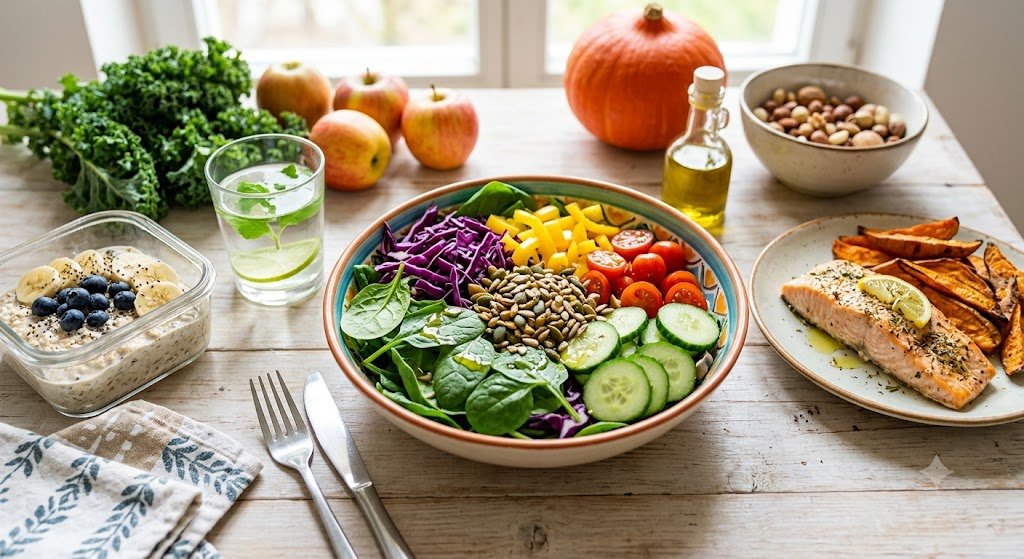
One of the easiest ways to think about balanced eating is to consider what goes onto your plate.
Try to include a combination of:
Vegetables
Include different colours and varieties wherever possible.
Examples:
- Spinach
- Carrot
- Tomato
- Beans
- Pumpkin
- Cabbage
- Broccoli
- Bottle gourd
- Cauliflower
- Beetroot
Different vegetables provide different combinations of vitamins, minerals, fibre and beneficial plant compounds.
Fruits
Choose whole fruits regularly.
Examples include:
- Banana
- Apple
- Orange
- Papaya
- Guava
- Watermelon
- Pomegranate
- Pineapple
- Mango
- Seasonal local fruits
Whole fruits are generally preferable to relying heavily on fruit juice because whole fruits retain their natural fibre.
WHO recommends that people older than 10 years aim for at least 400 grams of fruits and vegetables per day, with age-appropriate amounts for younger children.
Whole Grains and Cereals
Choose less-refined grains regularly where practical.
Examples:
- Brown rice
- Whole wheat
- Oats
- Millet
- Ragi
- Jowar
- Bajra
Traditional Indian cereals and millets can be useful components of a diverse diet.
Protein-Rich Foods
Protein can come from vegetarian and non-vegetarian sources.
Examples include:
- Lentils
- Dal
- Chickpeas
- Rajma
- Soy foods
- Milk
- Curd
- Paneer
- Eggs
- Fish
- Chicken
- Nuts
- Seeds
The best combination depends on dietary preference, nutritional requirements and individual health considerations.
Eat More Whole and Minimally Processed Foods
One of the most practical ways to improve overall dietary quality is to make whole and minimally processed foods the foundation of everyday meals.
Examples include:
- Fresh vegetables
- Whole fruits
- Pulses
- Beans
- Whole grains
- Nuts
- Seeds
- Eggs
- Fish
- Milk and curd
- Freshly prepared home meals
WHO notes that healthy diets are generally based on a variety of minimally processed and unprocessed foods while limiting foods high in sodium, free sugars and unhealthy fats.
This does not mean that every packaged food is automatically unhealthy.
Instead, it means learning how to choose packaged foods carefully and understanding food labels.
Learn to Read Food Labels
Food labels can help you compare products more intelligently.
Before buying packaged foods, check information such as:
- Serving size
- Calories
- Protein
- Total carbohydrate
- Added sugar
- Total fat
- Saturated fat
- Sodium
- Ingredient list
The ingredient list can also provide useful context.
Ingredients are generally listed according to quantity, with ingredients present in greater amounts appearing earlier.
FSSAI encourages consumers to make informed food choices and supports healthier eating through its Eat Right India initiative.
Rather than being influenced only by words such as “healthy,” “natural,” “fitness,” or “high protein” on the front of the packet, check the nutritional information.
Reduce Excess Added and Free Sugar
Sugar can easily accumulate in the diet through:
- Soft drinks
- Sweetened tea or coffee
- Desserts
- Biscuits
- Cakes
- Sweetened breakfast cereals
- Packaged juices
- Flavoured beverages
- Sweets
- Chocolates
WHO recommends limiting free sugars to less than 10% of total daily energy intake, with further reduction potentially offering additional health benefits.
Free sugars include sugars added during manufacturing or cooking as well as sugars found in honey, syrups and fruit juices.
A practical strategy is to gradually reduce the amount of sugar added to beverages and choose water or unsweetened drinks more often.
Watch Your Salt Intake
High sodium intake is associated with increased blood pressure.
WHO recommends that adults limit salt consumption to less than 5 grams per day, equivalent to less than 2 grams of sodium.
Salt can come not only from the salt shaker but also from foods such as:
- Packaged snacks
- Pickles
- Papad
- Instant noodles
- Sauces
- Processed meats
- Ready-to-eat products
- Salty biscuits
- Restaurant foods
Cooking more meals at home can make it easier to control how much salt is being added.
Use herbs, spices, lemon, garlic, ginger and other flavouring ingredients to enhance meals without relying entirely on salt.
Choose Healthy Sources of Fat
Dietary fat is essential, but the type and quantity of fat matter.
Foods containing useful sources of unsaturated fats include:
- Nuts
- Seeds
- Fish
- Groundnuts
- Certain vegetable oils
At the same time, intake of foods containing large amounts of saturated fat, industrial trans fat or heavily fried ingredients should be moderated.
Cooking methods can also make a difference.
Instead of making deep-frying the default option, rotate between:
- Steaming
- Grilling
- Boiling
- Baking
- Roasting
- Sautéing
- Pressure cooking
Traditional cooking methods can still form part of a healthy diet when overall balance and portion size are considered.
Protein Should Be Part of a Balanced Diet
Protein has become one of the most discussed topics in modern nutrition.
It is important for muscle maintenance and tissue repair, but protein should not be viewed in isolation.
A healthy diet also needs carbohydrates, healthy fats, fibre, vitamins and minerals.
Protein-rich foods include:
- Dal
- Chickpeas
- Beans
- Soy products
- Milk
- Curd
- Paneer
- Eggs
- Fish
- Chicken
- Nuts
- Seeds
People with specific medical conditions or specialised athletic requirements may need individualised advice from a qualified healthcare or nutrition professional.
There is rarely a need for ordinary healthy eating to become a competition about consuming the maximum possible amount of protein.
Healthy Diet Plans Should Be Sustainable
One of the biggest problems with many online diet plans is that they are designed for rapid short-term results rather than long-term habits.
A sustainable eating plan should ideally be:
- Nutritious
- Flexible
- Affordable
- Culturally appropriate
- Enjoyable
- Practical
- Maintainable
A good plan should fit into your actual life.
You should not need to eat exotic foods every day or prepare complicated recipes for every meal.
Indian foods such as dal, rice, roti, vegetables, curd, eggs, fish, pulses and seasonal fruits can all be incorporated into a healthy eating pattern.
Simple Balanced Indian Meal Ideas
Here are examples of balanced meal combinations.
Breakfast Ideas
- Vegetable poha with curd
- Oats with milk, fruit and nuts
- Vegetable upma with boiled egg
- Idli with sambar
- Besan chilla with vegetables
- Whole-wheat roti with egg and vegetables
- Dalia with vegetables
- Curd with fruit, oats and seeds
Lunch Ideas
- Rice + dal + mixed vegetables + curd
- Roti + rajma + salad
- Rice + fish + vegetables
- Millet roti + dal + vegetable sabzi
- Khichdi + vegetables + curd
- Brown rice + chickpeas + vegetables
Dinner Ideas
- Roti + paneer + mixed vegetables
- Rice + dal + vegetable curry
- Grilled fish + rice + vegetables
- Vegetable soup + paneer or egg + whole-grain roti
- Mixed dal khichdi + salad + curd
These examples are not personalised medical diet plans. Portion sizes and food choices should be adapted to individual needs.
Healthy Snacking Without Overcomplication
Snacking itself is not necessarily unhealthy.
The type and quantity of snack matter.
Better everyday options can include:
- Fruit
- Curd
- Roasted chana
- Nuts
- Seeds
- Boiled eggs
- Sprouts
- Homemade chaat
- Peanut-based snacks
- Vegetable sandwiches
- Buttermilk
Occasional treats can still fit into a balanced lifestyle.
Healthy eating is easier to maintain when it allows flexibility instead of creating unnecessary guilt around food.
Hydration Matters Too
Water is essential for normal body functioning.
Hydration requirements vary according to:
- Weather
- Activity
- Body size
- Diet
- Pregnancy
- Health status
Water should normally be the primary beverage.
During hot weather or exercise, fluid needs can rise considerably.
People working outdoors or participating in intense physical activity may need greater attention to hydration.
Healthy Weight Management Is Not About Crash Diets
Weight management is influenced by many factors, including:
- Energy intake
- Physical activity
- Sleep
- Genetics
- Age
- Medications
- Hormonal factors
- Medical conditions
- Stress
- Food environment
Crash diets may be difficult to sustain and can create an unhealthy relationship with food.
A more sustainable approach generally includes:
- Balanced meals
- Appropriate portions
- Regular movement
- Adequate sleep
- Consistency
- Monitoring progress gradually
NutritionalGrowth encourages balanced nutrition rather than unrealistic quick-fix approaches.
Combine Good Nutrition with Physical Activity
Nutrition and movement work together.
WHO recommends that adults generally accumulate 150–300 minutes of moderate-intensity aerobic physical activity per week, or an equivalent amount of vigorous activity, along with muscle-strengthening activities.
Physical activity can include:
- Walking
- Cycling
- Swimming
- Running
- Gym workouts
- Sports
- Yoga
- Dancing
- Household activities
You do not necessarily need an expensive gym membership to become more active.
Walking regularly and reducing prolonged sitting can be useful starting points.
Sleep Is Part of Wellness
Diet is only one component of health.
A balanced lifestyle also involves sufficient sleep and recovery.
Irregular sleep schedules may influence appetite, energy levels, mood and daily performance.
Helpful habits include:
- Maintaining a consistent sleep routine
- Reducing screen exposure close to bedtime
- Avoiding very heavy meals immediately before sleep
- Limiting excessive caffeine later in the day
- Creating a comfortable sleeping environment
Wellness works best when nutrition, movement, rest and mental well-being are considered together.
Improve Your Diet Gradually
Trying to change everything overnight often makes healthy eating harder to sustain.
Instead, start with manageable changes.
For example:
- Week 1: Add one extra serving of vegetables daily.
- Week 2: Replace one sugary beverage with water.
- Week 3: Add a protein source to breakfast.
- Week 4: Prepare more meals at home.
- Week 5: Increase your daily walking.
Small improvements repeated consistently can become long-term habits.
Do You Need Supplements?
Supplements can be useful when there is a genuine nutritional need, but they should not automatically replace a balanced diet.
People may require supplements due to:
- Diagnosed deficiencies
- Pregnancy
- Restricted diets
- Certain medical conditions
- Absorption problems
- Specific life stages
However, taking supplements without understanding your requirements may be unnecessary and, in some cases, potentially harmful.
Consult an appropriately qualified healthcare professional when considering supplements for a diagnosed deficiency or medical reason.
Avoid Nutrition Myths and Quick-Fix Claims
Nutrition information spreads quickly online.
Be cautious when you see claims such as:
- “Lose 10 kg instantly”
- “Detox your body in three days”
- “This single food burns fat”
- “Never eat carbohydrates”
- “One supplement cures everything”
- “This drink melts belly fat”
Nutrition science is rarely that simple.
A more credible approach looks at the entire dietary pattern instead of presenting one food as a miracle solution.
Reliable nutrition information should acknowledge individual differences, limitations and scientific uncertainty where appropriate.
Follow Food Safety Principles
Healthy food also needs to be safe food.
Basic practices include:
- Wash hands before handling food.
- Keep cooking areas clean.
- Wash fruits and vegetables appropriately.
- Separate raw and cooked foods.
- Cook foods thoroughly.
- Refrigerate perishable foods properly.
- Check expiry dates.
- Use safe drinking water.
FSSAI’s Eat Right India programme promotes the principle of eating food that is safe, healthy and sustainable.
Food safety is therefore an essential part of good nutrition.
Healthy Eating for Children
Children require adequate nutrition to support normal growth and development.
A balanced diet for children can include:
- Whole grains
- Vegetables
- Fruits
- Pulses
- Milk or suitable alternatives
- Eggs or other protein sources
- Nuts and seeds where age-appropriate and safe
Parents should focus on variety and healthy habits rather than comparing children only on weight or height.
Growth is influenced by nutrition, genetics, sleep, physical activity, health status and other factors.
If a child’s growth pattern is concerning, parents should consult a paediatrician or qualified nutrition professional instead of relying solely on internet diet plans.
Nutrition for Fitness
People involved in regular exercise require adequate food and hydration.
Fitness nutrition should support:
- Training
- Recovery
- Muscle repair
- Energy
- Hydration
Carbohydrates can provide energy for physical activity, while protein supports tissue maintenance and repair.
Healthy fats also remain important.
The exact amounts required vary greatly depending on body size, training volume, goals and other factors.
Athletes or people undergoing intensive training may benefit from personalised guidance from a qualified sports-nutrition professional.
Traditional Indian Foods Can Be Part of Healthy Eating
Healthy eating does not require abandoning traditional food.
India’s regional cuisines contain many nutrient-rich foods.
Examples include:
- Dal
- Lentils
- Millet
- Rice
- Roti
- Leafy vegetables
- Curd
- Fermented foods
- Fish
- Pulses
- Seasonal fruits
- Nuts and seeds
For readers from Northeast India, traditional foods such as leafy greens, fermented foods, seasonal vegetables, rice, fish and locally available produce can also form part of a nutritious diet.
The key is overall balance, diversity and preparation method.
The 80/20 Mindset for Sustainable Eating
Healthy eating does not require every meal to be perfect.
For many people, it can be more sustainable to make nutritious foods the foundation of the diet while allowing occasional favourite foods.
Instead of asking:
“Did I eat perfectly today?”
Ask:
“Are most of my everyday choices supporting my health?”
Long-term habits matter more than a single meal.
Wellness Is a Lifestyle, Not a Short-Term Challenge
Wellness involves more than following a temporary diet.
It includes:
- Nutritious food
- Regular physical activity
- Adequate sleep
- Hydration
- Stress management
- Social well-being
- Food safety
- Preventive healthcare
Healthy living becomes easier when these habits gradually become part of everyday life.
How NutritionalGrowth Can Help You Build Better Habits
NutritionalGrowth aims to make nutrition information practical and understandable.
Our resources explore topics including:
- Healthy eating
- Balanced diets
- Protein and nutrition
- Children’s nutrition
- Growth and development
- Fitness nutrition
- Weight management
- Healthy habits
- Digestive health
- Essential nutrients
- Traditional nutritious foods
- Everyday wellness
Rather than promoting unrealistic transformations, we encourage readers to learn about food, understand nutrition better and develop healthier habits that can be maintained over time.
Start Your Healthy Eating Journey Today
A healthier lifestyle does not need to begin with an extreme transformation.
Start with one better choice.
Add more vegetables to your meal.
Choose whole fruit instead of a sugary drink.
Drink more water.
Prepare one extra home-cooked meal.
Walk for an additional 20 minutes.
Improve your sleep routine.
Healthy living is built through small decisions repeated consistently.
NutritionalGrowth is here to help you understand nutrition, make informed food choices and build a healthier, more balanced lifestyle—one habit at a time.
Frequently Asked Questions
What is a healthy balanced diet?
A healthy balanced diet includes a variety of foods such as vegetables, fruits, whole grains, pulses, suitable protein sources, nuts, seeds and other nutrient-rich foods while limiting excess salt, free sugars and unhealthy fats.
What is the best diet plan for healthy living?
There is no single diet plan that is best for everyone. A suitable plan depends on factors such as age, activity level, health status, dietary preference and nutritional requirements. Sustainable plans generally emphasise varied, minimally processed foods.
How many fruits and vegetables should I eat daily?
WHO recommends at least 400 grams of fruits and vegetables per day for people older than 10 years, with lower age-appropriate amounts for younger children.
Is rice unhealthy?
Rice can be part of a balanced diet. Overall portions, preparation, total diet quality and the foods eaten alongside rice matter more than labelling one individual food as inherently good or bad.
Should I completely stop eating sugar?
Healthy eating does not necessarily require eliminating every source of sugar. However, intake of free and added sugars should be limited. WHO recommends keeping free sugars below 10% of total daily energy intake.
Is protein important for weight loss and fitness?
Protein contributes to tissue maintenance and repair and can form an important part of a balanced diet. However, successful weight management and fitness depend on the overall diet, physical activity and individual needs rather than protein alone.
Are supplements necessary for everyone?
No. Many people can obtain essential nutrients through a varied diet. Supplements may be appropriate for diagnosed deficiencies, specific health conditions or particular life stages under professional guidance.
Can traditional Indian food be healthy?
Yes. Traditional Indian diets can include nutritious foods such as vegetables, pulses, whole grains, millets, rice, curd, fish, eggs, nuts and seeds. Portion size, balance and preparation methods are important.
How can I start eating healthier?
Begin with practical changes such as eating more vegetables and fruits, drinking water instead of sugary beverages, choosing more whole foods, preparing meals at home and maintaining regular physical activity.
Is NutritionalGrowth a substitute for a doctor or dietitian?
No. NutritionalGrowth provides general educational information. People with medical conditions, allergies, diagnosed deficiencies, eating disorders, pregnancy-related concerns or other individual nutritional needs should consult an appropriately qualified healthcare professional.
Backlinks
- Healthy Eating Tips for a Better Lifestyle | NutritionalGrowth
Suggested backlink: WHO – Healthy Diet
WHO Healthy Diet Guidance - Best Balanced Diet Plan for Healthy Living and Better Nutrition
Suggested backlink: ICMR-NIN – Dietary Guidelines for Indians
ICMR-NIN Dietary Guidelines for Indians - Healthy Indian Diet Plan for Weight Management and Wellness
Suggested backlink: FSSAI – Eat Right India
FSSAI Eat Right India - Nutrition Tips for Better Health, Energy and Daily Wellness
Suggested backlink: World Health Organization
WHO Nutrition Resources - Best Foods for a Healthy Lifestyle | Complete Nutrition Guide
Suggested backlink: ICMR-National Institute of Nutrition
ICMR-National Institute of Nutrition - How to Build a Healthy and Balanced Diet for Everyday Life
Suggested backlink: WHO – Healthy Diet Recommendations
WHO Healthy Diet Recommendations - Healthy Diet and Exercise Tips for Better Fitness and Wellness
Suggested backlink: WHO – Physical Activity
WHO Physical Activity Guidance