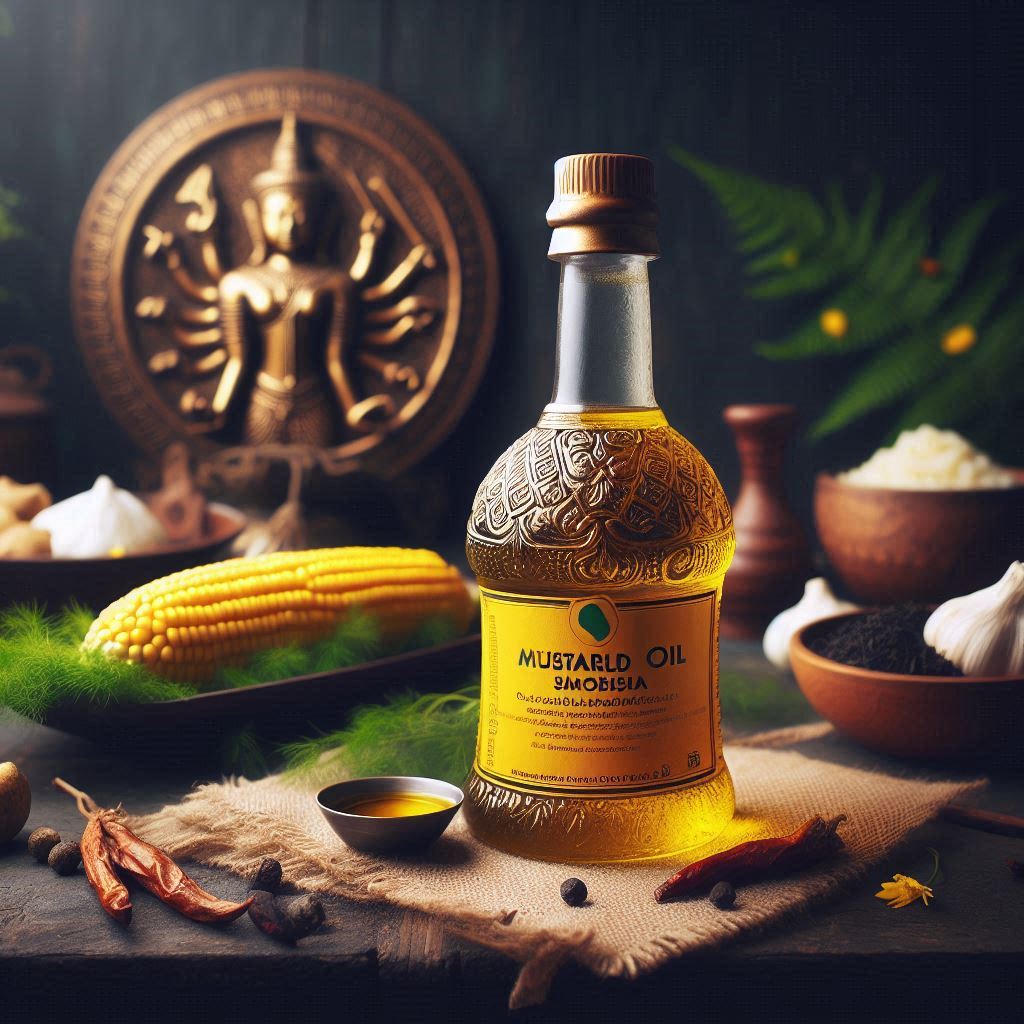
Mustard oil is associated with the pungent flavour of many Assamese dishes. Its culinary role is different from a medical benefit. This guide does not recommend oil as a treatment for infection, joint pain, skin conditions or digestive problems.
Check the actual product
Products called mustard oil are not necessarily interchangeable. Food rules and product types differ across markets. Choose an oil specifically labelled and permitted for culinary use where you live; never use a bottle marked “for external use only” in food.
The US Food and Drug Administration identifies a concern about unsafe erucic-acid levels in expressed mustard oil. A traditional name, a familiar aroma or advice to heat an oil does not establish that a particular bottle is suitable to eat.
Use flavour deliberately
If you have a suitable edible product, follow its label and your recipe. Consider how strongly flavoured you want a dish to be rather than assuming more oil makes a meal healthier. A recipe can also use another cooking oil suitable for the eater’s needs, with a different resulting flavour.
Do not treat smoking as a safety step
This page no longer instructs readers to deliberately heat oil until it smokes. Follow the oil and appliance instructions, control the heat and avoid leaving a hot pan unattended. Heating is not a substitute for checking product suitability.
Pickles and storage
Adding oil does not by itself validate a homemade pickle’s shelf life. Use a reliable, complete preservation method with appropriate storage instructions. Do not assume an oil layer makes a food safe indefinitely.
Keep claims proportionate
An oil’s role in a cuisine can be valued without claiming that it prevents heart disease, boosts immunity or replaces skin care. Consider the complete meal and seek personal advice for a health condition.