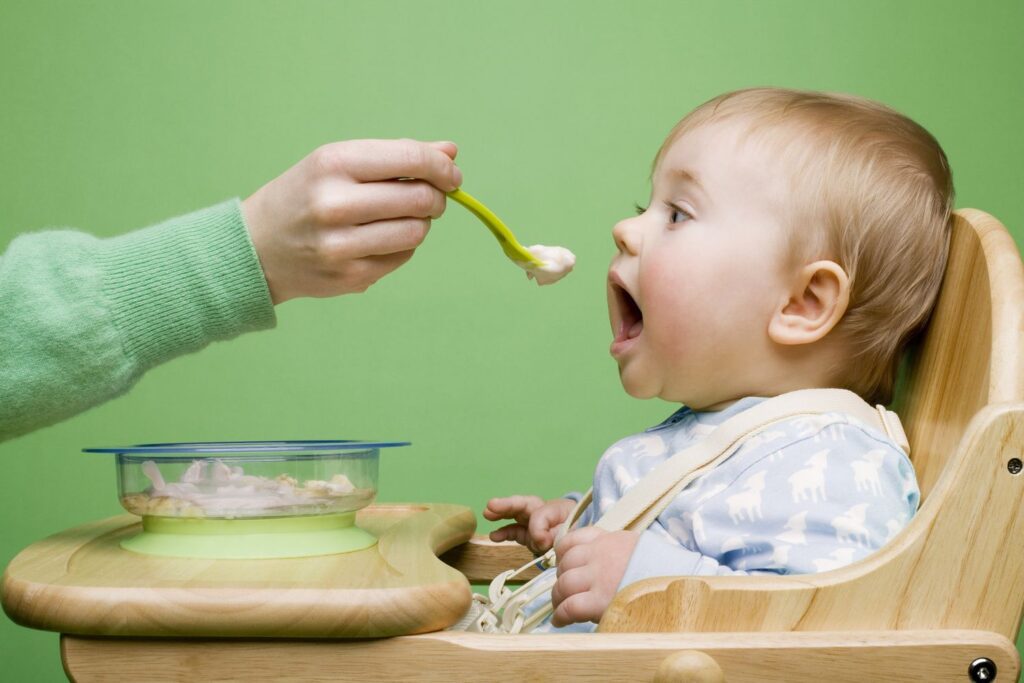
This 6–8 month baby food chart gives Indian families a starting point for complementary feeding, with rice, dal, pumpkin and other familiar foods. Around 6 months, when your baby can hold their head steady, sit upright with support and swallow food, offer a small amount of soft food alongside breast milk or infant formula. CDC signs of readiness for solids.
Indian baby food chart for 6–8 months
Start with small spoonfuls and gradually work towards two to three complementary meals a day across the 6–8 month stage. Follow your baby’s cues. Pause when they turn away or close their mouth. Continue their usual milk feeds. WHO complementary feeding guidance.
| Stage | Texture | Indian meal ideas |
|---|---|---|
| Around 6 months, when ready | Soft, smooth mash or thick purée | Mashed cooked moong dal, mashed pumpkin, or iron-fortified infant cereal prepared according to the label |
| As feeding skills develop | Thicker fork-mashed food with soft lumps as tolerated | Rice and moong dal khichdi, mashed lentils with sweet potato, or mashed fully cooked egg once introduced |
| By around 8 months, when ready | Soft lumps and soft finger foods suited to the baby’s skills | Thicker vegetable khichdi or a soft strip of cooked sweet potato that squashes easily between your fingers |
Include iron-rich foods regularly, such as mashed lentils, iron-fortified infant cereal or thoroughly cooked meat prepared in a texture your baby can handle. Rotate grains, vegetables and protein foods as your baby gets used to solids. UNICEF’s guide to feeding babies aged 6–12 months.
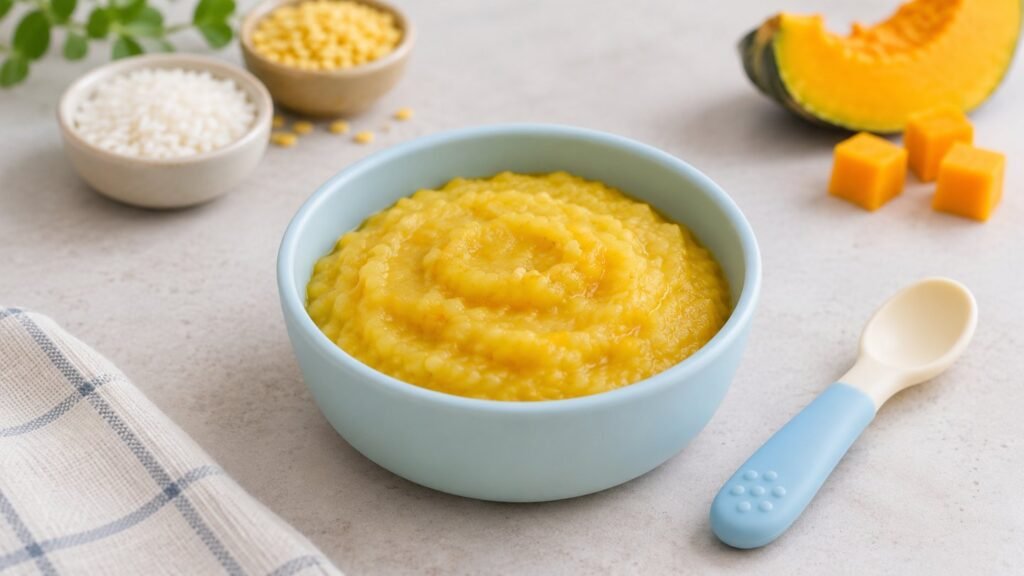
Moong dal and pumpkin khichdi for babies
Use this combination once your baby has tried the ingredients individually. This makes a small batch. Start with a few spoonfuls and follow your baby’s appetite.
- 1 tablespoon white rice
- 1 tablespoon split yellow moong dal
- 2 tablespoons peeled, finely diced pumpkin
- ¾ cup water, plus a little more if needed
- Wash your hands. Rinse the rice and dal, then add them to a small saucepan with the pumpkin and water.
- Bring to a boil, then simmer gently for about 20–25 minutes, stirring occasionally. Add a splash of water if needed. The rice, dal and pumpkin should squash easily with a fork.
- Mash the whole mixture. For a baby just starting solids, smooth out any firm lumps. The khichdi should sit on a spoon and slide off when tipped.
- Let a small portion cool to lukewarm and serve with a clean spoon while your baby sits upright. Keep the baby’s serving free of added salt, sugar and honey.
Feeding safety at a glance
- Stay close at every meal. Seat your baby upright and supervise throughout. Avoid whole nuts, whole grapes, popcorn, hard pieces of raw produce and thick spoonfuls of nut butter. CDC choking hazard guide.
- Skip honey before 12 months. Avoid added sugar and high-sodium foods. Keep cow’s milk out of the bottle or cup as a main drink before 12 months. CDC foods and drinks to avoid or limit.
- Introduce common allergens in an age-appropriate form. If your baby has severe eczema or an egg allergy, ask your paediatrician about introducing peanut. Ask for individual guidance if your baby was born prematurely or has trouble swallowing or gaining weight. CDC guidance on introducing new foods.
Can babies have dal water or rice water?
For complementary meals, offer the cooked rice and dal together as a thick, soft mash so your baby gets the food solids. India’s ICDS training guidance includes soft rice-and-pulse mixtures such as khichdi among its examples of first foods. Read the ICDS guidance on complementary feeding.
Explore more articles on growth and development. For family meals, browse our Assamese recipes collection.