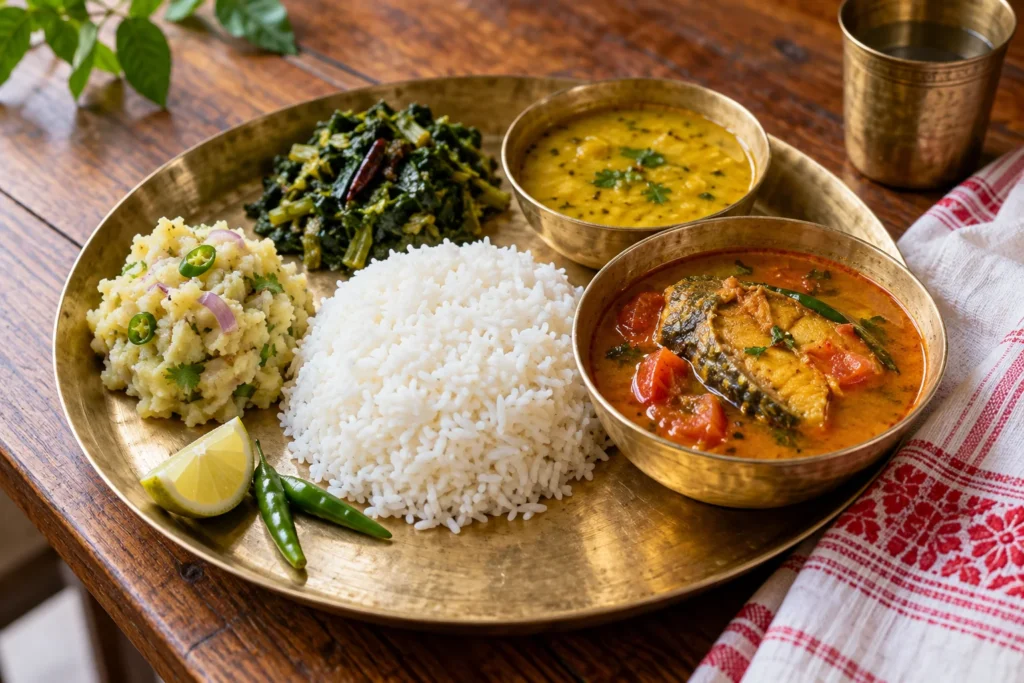
Assamese food brings together rice, seasonal vegetables, freshwater fish, pulses, herbs, and distinctive local flavours. From the tanginess of masor tenga to the comforting simplicity of aloo pitika, the cuisine offers much more than a list of famous dishes.
Food traditions vary across Assam’s communities and households. Ingredients, cooking methods, and festival menus reflect this diversity. Exploring traditional Assamese food is therefore a way to understand both the region’s kitchens and its cultural heritage.
At Nutritional Growth, we explore familiar foods with an appreciation for their traditions and their place in everyday eating.
What makes Assamese food special?
Many Assamese preparations allow individual ingredients to stand out. Sour fruits, leafy greens, mustard, and fresh herbs can provide flavour without an elaborate gravy.
There is no single cooking style that represents every household in Assam. Everyday meals and celebratory dishes can look very different, and recipes often change with the season.
1. Masor Tenga: Assamese sour fish curry
Masor tenga is a fish curry known for its refreshing sour flavour. The souring ingredient can vary: tomatoes, elephant apple, roselle leaves, or other locally available ingredients may be used.
Recipes differ between homes, so the same dish can taste noticeably different from one kitchen to another. It is commonly enjoyed with rice.
2. Khar: A distinctive Assamese preparation
Khar refers both to an alkaline cooking ingredient and to dishes made with it. Traditional kola khar is prepared using a filtrate from the ashes of certain banana plant materials.
Vegetables or pulses may form the base of a khar dish. Its distinctive flavour makes it an important part of Assamese culinary identity.
3. Aloo Pitika: Comfort in a simple dish
Aloo pitika is a mashed potato preparation often seasoned with mustard oil, onion, green chilli, and coriander. Some households use a simpler combination.
It shows how a few everyday ingredients can create a satisfying accompaniment. Rice, dal, and aloo pitika remain a familiar comfort meal.
4. Xaak: Leafy greens in everyday cooking
Xaak, also written as saak or haak, refers to leafy greens. Different varieties appear in home cooking according to local availability and season.
Their preparation may be simple, allowing the leaves’ own flavour and texture to remain noticeable.
5. Patot Diya Maas: Fish cooked in leaves
Patot diya maas is a leaf-wrapped fish preparation. Seasonings and cooking methods vary, with the wrapping helping create a distinctive aroma.
It is another example of how Assamese cooking uses both local ingredients and practical traditional techniques. These dishes are among the foods described in Assam Tourism’s guide to Assamese cuisine.
How to explore Assamese food beyond a restaurant menu
A restaurant meal can introduce you to well-known dishes, but everyday home cooking offers another perspective. Ask which vegetables are in season, how a family prepares its favourite curry, or what it serves on an ordinary weekday.
For a first tasting, choose a few contrasting preparations. A sour curry, a mashed accompaniment, and a vegetable dish will help you notice differences in texture, aroma, and flavour.
Vegetarian visitors can ask for vegetable and pulse preparations, while checking whether individual dishes contain fish or other animal ingredients. Recipe names alone may not explain everything used in the kitchen.
Appreciating tradition without making health assumptions
A traditional dish does not have one fixed nutritional profile. Ingredients, portion sizes, and the amount of oil or salt used can change between recipes.
At Nutritional Growth, we encourage readers to appreciate regional food without relying on claims that a particular dish “detoxes” the body or cures illness. Cultural significance and medical evidence are different things.
Frequently asked questions
What is Assamese food?
Assamese food includes the diverse cooking traditions of Assam. Rice, vegetables, pulses, fish, and local flavouring ingredients appear in many meals, with considerable variation across communities.
Which Assamese dishes should beginners try?
Masor tenga, aloo pitika, a seasonal xaak preparation, and khar offer an introduction to several distinctive flavours. Choose dishes according to your dietary preferences.
Is Assamese food always spicy?
No. Heat levels vary by recipe and household. You can ask for less chilli while exploring the other flavours.
Can vegetarians enjoy Assamese cuisine?
Yes. Vegetable, leafy green, and pulse preparations offer plenty to explore. Confirm the ingredients when ordering or eating outside your home.
Discover more with Nutritional Growth
Understanding regional food starts with curiosity about ingredients and the people who cook them. Explore more Nutritional Growth articles for practical ways to enjoy familiar foods as part of varied everyday meals.
For practical meal ideas, read our guide to healthy Assamese food and building a balanced plate with local ingredients.