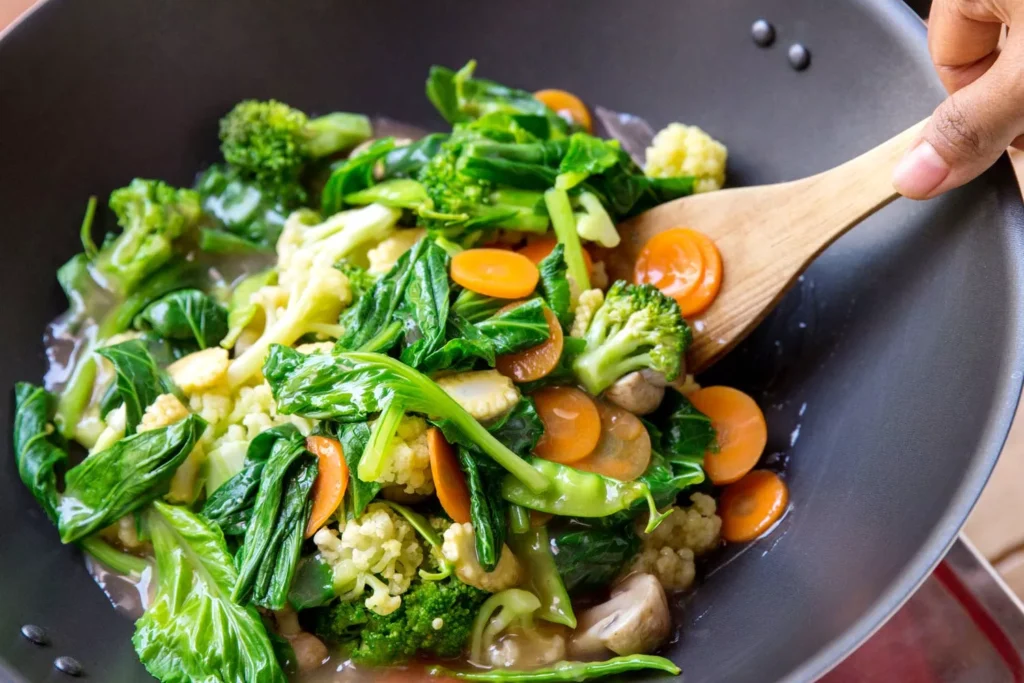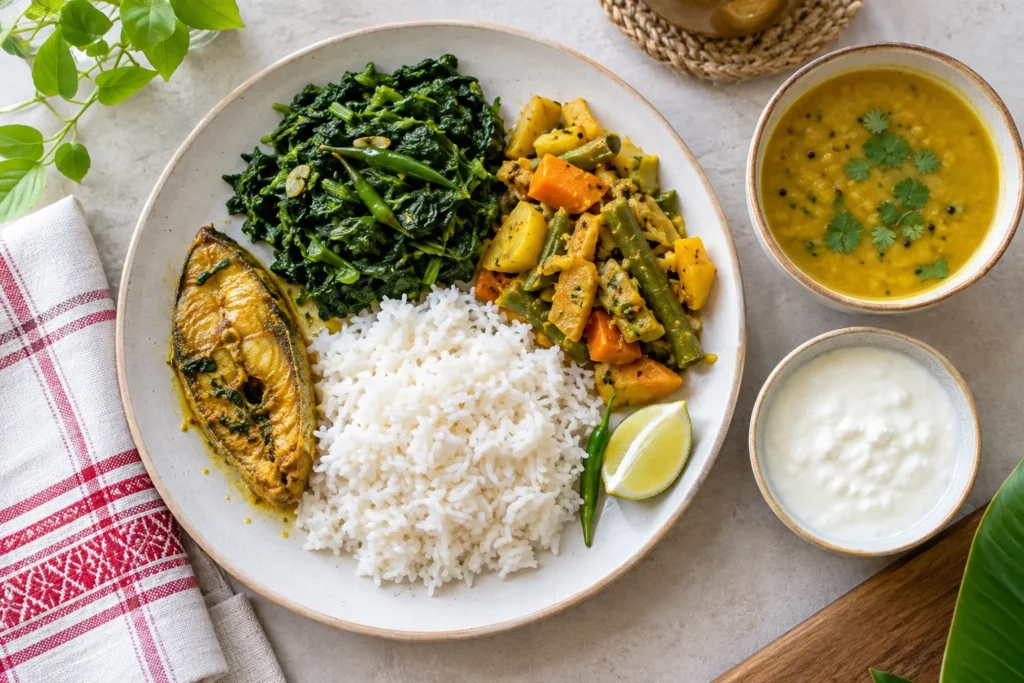
Healthy Assamese food can begin with the ingredients already available in your kitchen. Rice, dal, seasonal vegetables, leafy greens, fish, eggs, and curd offer many possibilities for varied meals.
You do not need to replace familiar food with an unfamiliar menu to improve the way you eat. A useful starting point is to look at the whole meal: what it includes, how it is prepared, and whether the portions suit your needs.
At Nutritional Growth, we believe practical food choices should fit everyday life, local availability, and personal preferences.
What makes a meal balanced?
A balanced diet includes different food groups because no single food supplies everything the body needs. The ICMR–National Institute of Nutrition’s dietary guidelines emphasise variety, including vegetables, pulses, cereals, and other suitable foods.
Applied to an Assamese kitchen, this means looking beyond the rice serving. Consider what accompanies it and whether you regularly include vegetables and a protein source. The aim is a repeatable habit that works with your household’s cooking.
1. Keep rice, and pay attention to its companions
Rice can be part of a balanced diet. Instead of judging the meal by rice alone, look at what fills the rest of your plate.
For example, a lunch of rice and a small spoonful of potato mash offers a different combination from rice served with dal, vegetables, and fish or another protein source.
A practical check before eating is:
- Have I included vegetables?
- Is there a protein source?
- Does the rice portion suit my appetite and activity?
Portions vary between people. A physically active adult and someone with a smaller appetite may need different amounts.
2. Give vegetables a regular place
An easy approach is to include vegetables in more than one meal. Use what is available locally rather than waiting for a particular “superfood.”
Try rotating different vegetables through the week. This can make meals more interesting and reduce reliance on a single favourite preparation.
You can also plan the vegetable dish first when deciding what to cook. That small change helps prevent vegetables from becoming an afterthought.
3. Include a protein source at main meals
Fish, eggs, pulses, beans, milk products, and other suitable foods can contribute to protein intake. Choose options that fit your preferences and budget.
Vegetarian households can vary their pulse and bean preparations, rather than relying on the same thin dal every day. Households that eat fish or eggs can alternate these with plant-based meals.
The World Health Organization’s healthy diet guidance supports dietary variety, including pulses, whole grains, vegetables, fruits, and suitable protein sources.
4. Measure oil instead of pouring freely
A dish can look light while containing more oil than expected. Measuring the amount used for a recipe makes it easier to understand your cooking habits.
You can also vary cooking methods across the week. Alongside fried foods, include preparations that are boiled, steamed, roasted, or cooked with a measured amount of oil. These are practical ways to apply ICMR–NIN advice to limit added fats, salt, and sugar.
5. Review what goes into breakfast and tea
Breakfast and tea breaks are useful places to notice routine additions. Consider how often you add sugar, how much you use, and whether the meal includes something beyond a cereal-based food.
For example, if you enjoy flattened rice, you could pair it with plain curd and fruit according to your preferences. Treat this as a meal idea rather than a fixed prescription. The goal is to review your usual pattern and make manageable changes.
6. Enjoy sweets with attention to frequency and portion
Favourite sweets can have a place in celebrations and shared meals. It helps to consider how often they appear and how much you usually eat.
Jaggery is still a source of sugar. Using it instead of white sugar does not make a sweet unlimited or automatically suitable for someone managing blood glucose.
For everyday eating, pay attention to added sugar across drinks, snacks, and desserts together. ICMR–NIN guidance recommends limiting added sugar rather than judging it only by its name or source.
An example of a varied Assamese-style day
The following ideas show possible food combinations. They are not a personalised diet chart.
- Breakfast: Flattened rice with plain curd and fruit.
- Lunch: Rice, dal, leafy greens, another vegetable, and fish or a vegetarian alternative.
- Optional snack: Fruit, unsalted nuts, or plain curd.
- Dinner: Rice or another preferred cereal with vegetables and a pulse, egg, fish, or other suitable protein dish.
Adjust the foods and portions to your needs, availability, and preferences.
Common mistakes to avoid
- Calling every traditional dish healthy: The recipe and serving size still matter.
- Removing rice without improving the rest of the meal: Look at the complete eating pattern before blaming one food.
- Adding vegetables but overlooking protein: Both deserve attention when planning meals.
- Expecting one dish to cause weight loss: Body weight is influenced by overall intake, activity, and other factors.
- Following the same portions as someone else: Needs differ with age, activity, health, and life stage.
Frequently asked questions
Is Assamese food healthy?
It can be part of a healthy diet. The overall combination of foods, preparation methods, and portions matters more than the cuisine’s name.
Can I eat rice every day?
Rice can fit into a varied diet. Pair it with vegetables and suitable protein foods, and choose portions appropriate for you.
Do I need expensive ingredients for balanced meals?
No. Locally available vegetables, pulses, and other familiar foods can help you build varied meals. Choose according to affordability and access.
Is this meal example suitable for diabetes or kidney disease?
It is a general example. People managing medical conditions may need different portions or food choices and should use personalised advice from a qualified professional.
Make your next meal a little more varied
Start with one change: add a vegetable preparation, include a protein source, or measure the oil used in a favourite recipe. Small changes are easier to repeat when they work with the foods you already enjoy.
For a closer look at regional dishes, read our guide to traditional Assamese food. Explore Nutritional Growth for clear, practical information about regional food and everyday nutrition.