
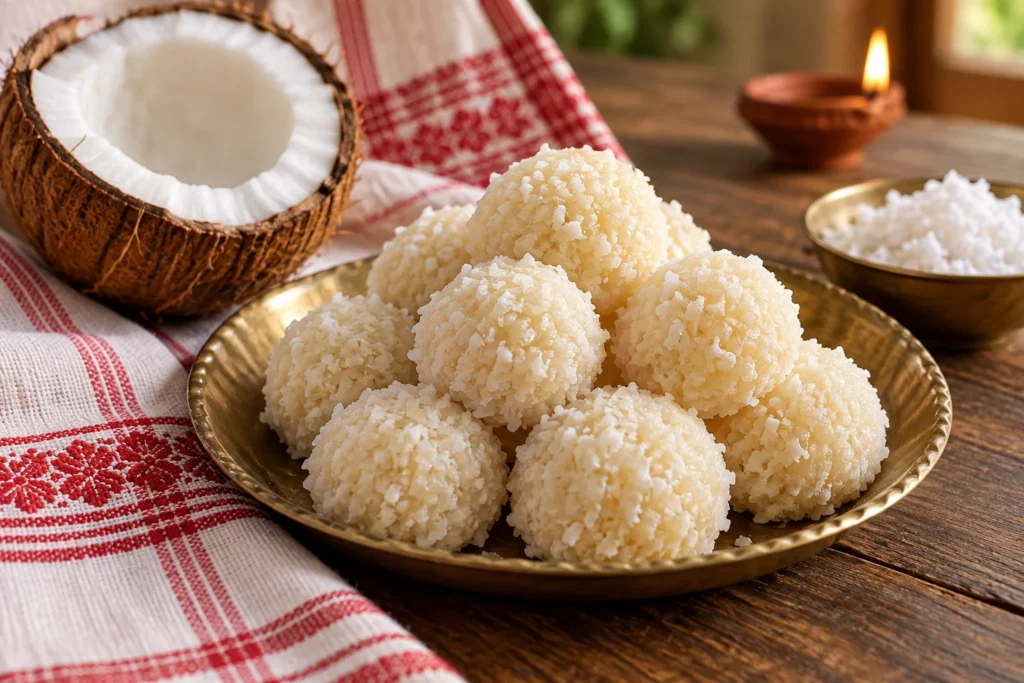
Coconut ladoo without condensed milk needs just freshly grated coconut and sugar for a simple Assamese-style sweet. Known as narikol laru or narikolor laru, these small coconut balls are a lovely addition to a festive plate. Below you will find a small-batch method, texture checks and fixes for a mixture that will not hold together.
Planning homemade sweets for Diwali 2026? Assam’s official holiday calendar lists Diwali on 8 November. This coconut sweet offers an Assamese touch to your celebration, while also belonging to the region’s Bihu and family-gathering traditions. It is not exclusive to Diwali.
Jump to the recipe · Fix common problems · Read the FAQs
What is narikol laru?
Narikol laru is an Assamese coconut sweet made by bringing coconut and a sweetener together, then shaping the warm mixture into balls. Assam Tourism describes versions using sugar or jaggery. Household methods differ: some cooks favour pale sugar-based laru, while others enjoy the deeper colour and flavour of gur.
This version uses sugar and fresh coconut. It contains no condensed milk, milk powder or khoya. Cardamom is optional, so you can keep the coconut flavour at the centre.
Coconut ladoo without condensed milk: the recipe
Yield: about 10–12 small ladoos, depending on size
Allow: roughly 30–40 minutes, including grating and shaping; coconut moisture affects cooking time
Equipment: a heavy pan, spatula, measuring cup and clean plate
Recipe note: This is a home-style preparation guide, not a kitchen-tested recipe from Nutritional Growth. Use the texture checks below rather than relying only on the clock.
Ingredients
- 2 loosely filled cups finely grated fresh mature coconut
- ½ cup granulated sugar
- ¼ teaspoon ground cardamom, optional
- A little neutral oil for your palms, only if needed
Use the same cup for both ingredients. Start with fresh, pleasant-smelling coconut. Scrape mainly the white flesh if you want a pale finish. Larger, coarse shreds make it harder to form neat balls.
How to make narikol laru
- Combine before heating. Put the coconut and sugar into a heavy pan. Mix so that the sugar is spread through the coconut. Keep a clean plate ready beside the stove.
- Cook gently. Set the pan over low heat. Stir frequently, scraping the bottom and sides. As the sugar dissolves, the mixture should become moist and sticky. Avoid high heat, which can brown the coconut before the mixture binds.
- Watch the texture. Keep stirring until the mixture gathers together and there is no loose liquid pooling in the pan. It should look moist and cohesive, rather than dry and toasted. Add cardamom if using.
- Try one small portion. Remove the pan from the heat. Transfer a teaspoonful to the plate and let it cool until safe to touch. Gently press it together. If it holds its shape, the mixture is ready. If it slumps and releases liquid, return the pan to low heat briefly, stir, and test again.
- Shape while warm. Let the remaining mixture cool enough to handle safely. Lightly oil your palms if necessary. Press small portions together and roll gently. Do not handle hot sugar or rush this step.
- Cool and serve. Arrange the ladoos separately on a clean plate. Let them cool before placing them in a covered container.
Why are my coconut ladoos not binding?
The mixture is wet and spreads out
Fresh coconuts vary in moisture. Return a wet mixture to low heat for a short interval, stirring continuously, then repeat the cooled-portion test. Adding a large amount of dry coconut at once can change the ingredient balance.
The mixture is dry and crumbles
It may have cooked too long or cooled before shaping. Try gently warming a small portion with a few drops of water, then test whether it presses together. Add liquid cautiously; the aim is a cohesive mixture, not a wet paste.
The outside is turning brown
Lower the heat and keep scraping the base. A heavy pan helps distribute heat. For a pale sugar-based laru, stop before the coconut becomes toasted. Jaggery versions naturally have a darker appearance.
Serving, storage and festive gifting
Serve a small plate with tea, or pair it with other regional treats from our Assamese recipes collection. For a wider introduction to the cuisine, explore our traditional Assamese food guide.
Make a small batch close to serving time. Once cooled, refrigerate in a clean, airtight container and use promptly. Fresh coconut moisture, handling and room temperature all affect keeping quality; this homemade batch has no validated shelf life. FSSAI’s guidance explains that different sweet ingredients lead to different storage lives, so do not assume every ladoo keeps as long as a dry sweet.
For gifting, use food-safe liners and include the preparation date, ingredients and a note to refrigerate. Keep the box cool during transport. Do not put warm ladoos into a sealed gift box, where condensation can collect.
Frequently asked questions
Can I make coconut ladoo with only two ingredients?
Yes. Fresh coconut and sugar form the base of this version. Cardamom and the small amount of oil used for shaping are optional.
Can I replace fresh coconut with desiccated coconut?
Not directly in this method. Desiccated coconut has much less moisture and may need a different liquid balance. Use a recipe designed for it instead of swapping cup for cup.
Can I use jaggery instead of sugar?
Jaggery is used in Assamese laru too, but it changes the colour, flavour and moisture. Follow a dedicated gur-based method rather than assuming this sugar method will behave identically.
Does this recipe contain dairy?
The ingredients listed here contain no milk products. Use neutral oil rather than ghee for shaping, and check packaged ingredient labels if you need to avoid dairy.
Is this an everyday health food?
It is a festive sweet containing added sugar. Enjoy it as a sweet rather than treating homemade ingredients as a reason for unlimited portions.
Which version does your family make: white coconut laru or golden jaggery laru? Share your household variation in the comments, and save this guide for your next festive cooking day.
Sources and further reading
- Assam Tourism: culinary traditions and narikolor laru
- Assam government: 2026 holiday calendar
- KHAR: an Assamese home-cook’s coconut-and-sugar preparation — background for the small-batch method; wording and troubleshooting here are original.
- FSSAI: guidance on milk products and the keeping quality of sweets
Featured image: AI-generated illustration of coconut laru; it does not document a cooking test.

