A high-fibre Indian breakfast can start with ordinary kitchen ingredients: besan, whole moong, chickpeas, vegetables and seasonal fruit. You do not need an expensive powder or a cupboard full of imported seeds.
The online conversation around “fibremaxxing” has brought fresh attention to fibre. The useful takeaway is simple: include a wider variety of plant foods and increase fibre gradually. Breakfast is one opportunity to begin, rather than a challenge to squeeze your entire daily intake into one meal.
Here are seven everyday breakfast combinations, including an Assamese-inspired option, plus preparation tips for busy mornings.
What is fibremaxxing?
Fibremaxxing is a social-media term for deliberately eating more fibre. It is not a medical diet or a reason to chase the highest possible number. Dietary fibre is found in plant foods, including pulses, whole grains, vegetables, fruit, nuts and seeds.
The World Health Organization recommends at least 25 grams of naturally occurring dietary fibre per day for adults. This is a whole-day recommendation, not a breakfast target. Your needs and tolerance may differ, particularly if you have a digestive condition or have been advised to follow a restricted diet.
For a wider view of everyday meals, read our guide to healthy eating and balanced Indian meals.
How to build a high-fibre Indian breakfast
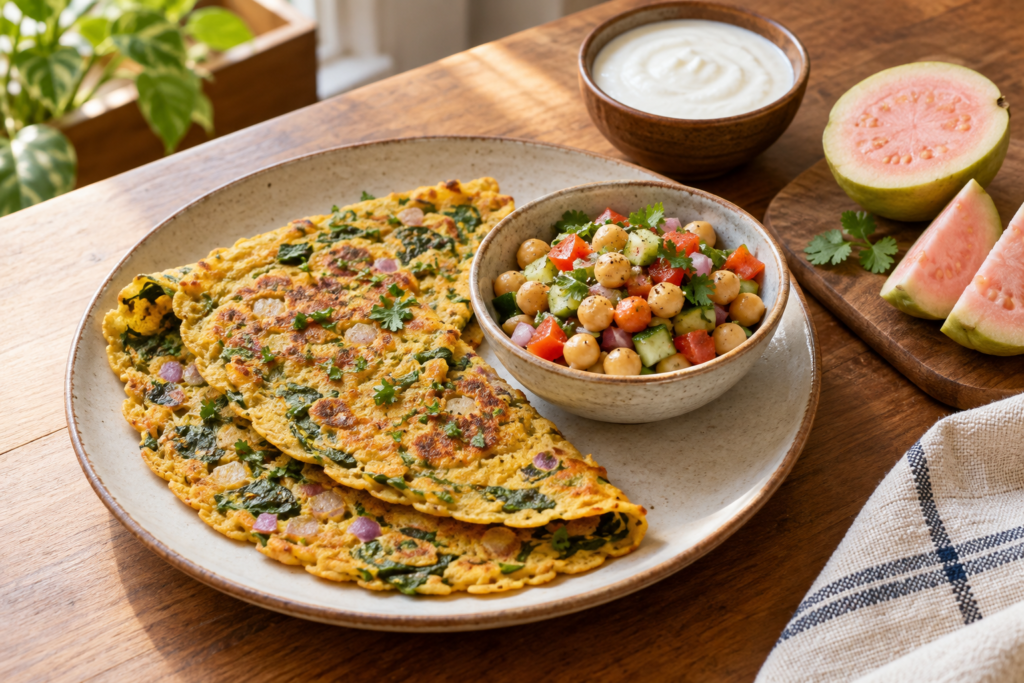
Start with a pulse or whole grain, add vegetables or whole fruit, and include a protein food that suits your preferences. For example, vegetable besan chilla with plain curd brings together a pulse-based batter, vegetables and a dairy accompaniment.
Eggs, milk and plain curd can contribute protein, but they do not supply dietary fibre. The plant ingredients in the meal do that job. Similarly, adding one spoon of seeds does not automatically make an otherwise low-fibre breakfast high in fibre.
7 everyday breakfast ideas to try
1. Vegetable besan chilla with plain curd
Mix half a cup of besan with chopped spinach, onion, grated carrot, cumin and enough water to make a pourable batter. Cook small chillas on a lightly oiled pan until both sides and the centre are cooked. Serve with plain curd or an unsweetened fortified soy alternative.
Practical tip: Chop the vegetables the night before and refrigerate them in a clean, covered container. Mix the batter fresh in the morning. Besan contributes fibre; the vegetables add variety without requiring a separate dish.
2. Whole-moong pancakes with tomato chutney
Soak whole green moong according to your usual recipe, drain, rinse and blend with ginger, cumin and water. Stir in chopped coriander and cook thin pancakes thoroughly. Serve with freshly prepared tomato chutney.
Whole moong retains its outer covering and offers a different texture from split, dehulled yellow dal. Begin with a portion you tolerate rather than making an unusually large serving because pulses are considered healthy.
3. Vegetable dalia with peas
Cook broken whole wheat with carrots, peas, beans and your preferred mild spices. Keep the texture soft by adding water as needed. Add a side of curd, tofu or an egg if you want another protein source.
Shopping tip: Choose broken whole wheat rather than assuming ordinary refined semolina has the same fibre content. Dalia contains wheat and is unsuitable for people who must avoid gluten.
4. Cooked-chana breakfast bowl
Combine tender, fully cooked chickpeas with chopped cucumber, tomato, coriander and lemon. Add a small whole-wheat roti if desired. This works well when you want something savoury without making a batter.
Use a modest portion of chickpeas at first if you rarely eat beans. Canned chickpeas can be convenient: drain and rinse them, and check the label for added salt. Refrigerate prepared ingredients promptly and follow safe storage guidance.
5. Vegetable poha with peas and peanuts
Prepare poha with onion, carrot, peas and a small handful of roasted peanuts. Finish with lemon and coriander. The pulses, vegetables and peanuts improve the fibre contribution compared with a bowl made mainly from plain flattened rice.
Poha varieties differ, so do not assume all flattened rice is a whole-grain product. Look at the ingredients and nutrition label when available. Avoid peanuts if you have a peanut allergy; cooked chickpeas are another possible addition.
6. Whole-grain ragi dosa with vegetable sambar
Use a dosa recipe that includes whole-grain ragi flour, and pair it with dal-based sambar containing vegetables. The combination matters: a small amount of ragi mixed into mostly refined flour is different from a recipe built around whole grains.
Make enough sambar for another meal and refrigerate it promptly. Reheat thoroughly before serving. This can reduce morning preparation while giving you a practical way to include both pulses and vegetables.
7. Assamese-inspired jolpan with a fibre-rich side
If you enjoy doi-chira or komal saul jolpan, keep the familiar base and add a portion of whole fruit, such as guava or papaya, alongside some cooked chana if it suits you. Use plain curd and adjust sweeteners to your preference.
Keep the claim realistic: Chira and komal saul are not automatically high-fibre foods, and curd contains no fibre. The whole fruit and pulses provide the main fibre boost in this variation. Explore our traditional doi-chira bhuj recipe for the cultural background and basic preparation.
A simple seven-day breakfast rotation
- Monday: Vegetable besan chilla and plain curd.
- Tuesday: Vegetable dalia with peas.
- Wednesday: Whole-moong pancakes and tomato chutney.
- Thursday: Cooked-chana bowl with a small roti.
- Friday: Vegetable poha with peas and peanuts.
- Saturday: Ragi dosa and vegetable sambar.
- Sunday: Jolpan with whole fruit and a cooked-pulse side.
This is a flexible ideas list, not a calorie-controlled or medically prescribed plan. Change ingredients and portions for your appetite, allergies, budget and health needs. Exact fibre content depends on the ingredients, quantities and recipe; these meals have not been laboratory analysed.
Increase fibre without turning breakfast into a challenge
NIDDK advises adding fibre a little at a time so the body can adjust, and drinking enough fluids to help fibre work. A sudden jump in beans, bran or seeds can be uncomfortable. Start by improving one familiar breakfast and build from there.
- Add one vegetable or a small pulse portion before changing every meal.
- Choose whole fruit more often than strained juice.
- Include fluids across the day; follow any clinician-prescribed fluid restriction.
- Keep protein foods and overall meal variety in the picture.
If you have persistent abdominal symptoms, a digestive disease or a prescribed low-fibre diet, seek individual advice before deliberately increasing fibre. Food changes are not a substitute for assessment of ongoing symptoms.
Frequently asked questions
Which Indian breakfast is high in fibre?
Pulse-based chillas, vegetable dalia, chickpea bowls and whole-grain dosa with sambar can all contribute fibre. The actual amount depends on the portion and recipe, so there is no single winner for every household.
Can I get fibre without eating oats?
Yes. Whole moong, besan, chickpeas, whole wheat, whole-grain millets, vegetables and whole fruit provide other ways to include fibre. Rotate foods you enjoy and can afford.
Is fibremaxxing good for weight loss?
Adding fibre does not guarantee weight loss. Body-weight changes depend on your overall eating pattern and many other factors. Choose satisfying, varied meals rather than treating one breakfast as a fat-burning solution.
Do I need a fibre supplement?
These breakfast ideas use ordinary foods and do not require supplements. A clinician may recommend a supplement for a specific reason; it should not replace a varied diet or be added simply to follow an online trend.
Start with the breakfast you already enjoy
Try one manageable change this week: peas in poha, vegetables in chilla, or whole fruit alongside jolpan. A useful high-fibre Indian breakfast is one you can prepare regularly and comfortably enjoy.
For more regional inspiration, browse our nutrition articles and recipe journal.
Sources and further reading
- World Health Organization: Healthy diet — food-group guidance and daily fibre recommendations.
- NIDDK: Eating, diet and nutrition for constipation — gradual fibre increases, food sources and fluids.
- NDTV Food: Fibremaxxing and familiar Indian foods — September 2026 trend context, rather than the basis for medical advice.
Editorial note: This article provides general nutrition education, not personalised medical advice. Featured image is an AI-generated food illustration.