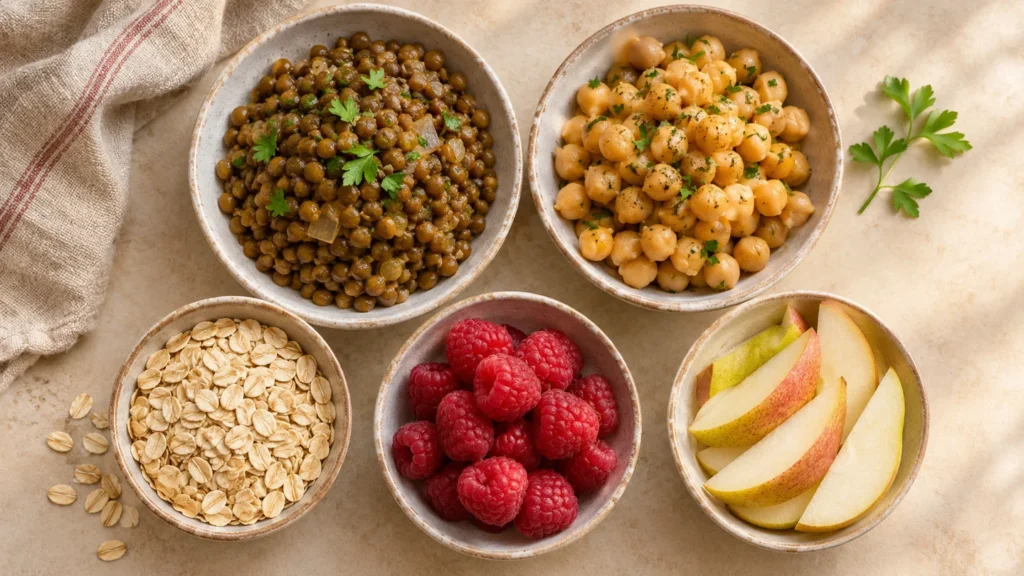
Fibermaxxing means deliberately eating more dietary fiber. The trend shines a light on an everyday question: how can you get more fiber from foods you already buy? Start by changing one meal. A pear with its skin, a spoonful of chickpeas in a soup, or oats in place of a refined cereal can give you a practical starting point.
Published by Nutritional Growth · Editorial standards and corrections
How much fiber do you need per day?
The National Institute of Diabetes and Digestive and Kidney Diseases lists 22 to 34 grams a day for adults, depending on age and sex. The U.S. Food and Drug Administration uses 28 grams as the Daily Value on labels, based on a 2,000-calorie diet. Use the label figure to compare products and the age-and-sex guidance to understand why individual needs differ.
Read both the serving size and the grams of fiber. If a cereal has 4 grams per serving and you eat half that amount, you get about 2 grams from the cereal. When comparing two boxes, use the portion you would actually eat. The FDA considers 20% Daily Value or more per serving high in fiber.
How to increase fiber without changing your whole diet
- Find your easiest meal to change. If you usually eat toast for breakfast, compare your bread with a whole-grain option. If you regularly make soup, stir in a small portion of cooked lentils.
- Give yourself time to adjust. Keep the first portion modest and see how you feel over the next few days. A sudden increase can cause gas or bloating. Add another change once the first feels comfortable, and drink water regularly.
- Rotate your sources. Use beans and lentils at lunch, a whole fruit for a snack, and vegetables or a whole grain at dinner. Choose foods you actually enjoy and can buy regularly.
Easy high-fiber food swaps
| When you usually have | Try this | Quick preparation |
|---|---|---|
| Fruit juice with breakfast | A whole orange or pear | Wash and slice the pear and keep the skin on. |
| Plain vegetable soup | Vegetable soup with chickpeas | Drain and rinse canned chickpeas before stirring them in. |
| Rice as a side | Rice with a small serving of dal | Cook masoor dal ahead and add some at lunch. |
| Plain yogurt | Yogurt with oats and fruit | Stir in rolled oats and top with berries or chopped apple. |
For more ways to put these ideas into meals, see our high-fibre Indian breakfast guide and our guide to everyday foods including lentils, beans and chickpeas.
Do you need a fiber supplement?
Foods such as lentils, oats, fruit and vegetables give you fiber alongside other nutrients. A supplement such as psyllium can be appropriate for some people. Ask a healthcare professional or pharmacist about suitability and timing if you take regular medication, have ongoing digestive symptoms, or already follow a prescribed diet. University of Utah Health explains when fiber supplements may be useful.
Should you add more fiber if you feel bloated?
If gas or bloating starts after a big increase, slow down and try a smaller serving of the foods you recently added. If symptoms persist or recur, a clinician can help determine what is causing them and which foods may work for you.