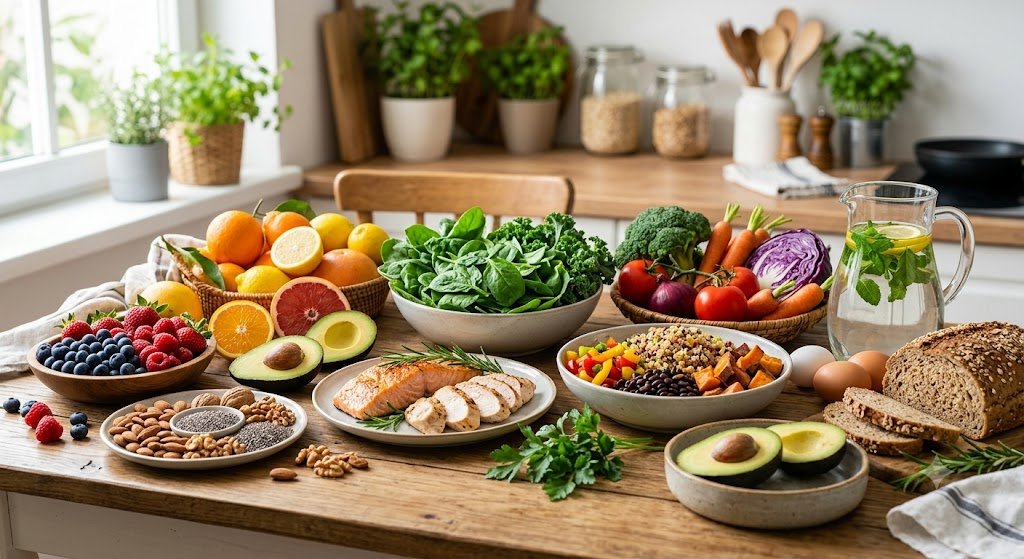
Good nutrition is not about relying on one “superfood.” Healthy growth, strong immune function, and steady energy come from eating a varied, balanced diet that provides enough protein, complex carbohydrates, healthy fats, vitamins, minerals, and fibre.
The World Health Organization emphasizes four basic principles of a healthy diet: adequacy, balance, moderation, and diversity. WHO also recommends building meals mainly around minimally processed foods such as vegetables, fruits, whole grains, pulses, nuts, and appropriate protein sources while limiting excess salt, free sugars, saturated fat, trans fat, and heavily processed foods. World Health Organization
For NutritionalGrowth.com, this guide explains some of the best foods you can include in your daily diet to support healthy development, normal immune function, sustained energy, and overall wellness.
Why Nutrition Matters for Growth, Immunity and Energy
The body needs nutrients every day for thousands of processes.
Protein helps build and repair tissues. Carbohydrates provide a major source of energy. Healthy fats support cell function and help the body absorb certain vitamins. Vitamins and minerals contribute to normal growth, metabolism, blood formation, immune function, and many other processes.
WHO notes that better nutrition is associated with healthier development, stronger immune systems, improved productivity, and lower risk of several noncommunicable diseases. World Health Organization
The key is not eating enormous quantities of one nutrient. It is consuming a variety of nutrient-rich foods regularly.
1. Eggs – A Convenient Source of High-Quality Protein
Eggs are one of the most versatile foods for a balanced diet.
They provide:
- High-quality protein
- Vitamin B12
- Choline
- Selenium
- Fat
- Several additional vitamins and minerals
Protein is particularly important during periods of growth because the body uses amino acids to build and maintain tissues.
Eggs can be included in:
- Breakfast
- Sandwiches
- Salads
- Rice dishes
- Curries
- Vegetable meals
Boiling, poaching, or preparing eggs with vegetables can be a simple way to include them without excessive added fat.
For people who eat eggs, they can be an easy protein option alongside legumes, dairy, fish, poultry, nuts, and seeds.
2. Milk, Curd and Other Dairy Foods
Milk and dairy foods can contribute:
- Protein
- Calcium
- Vitamin B12
- Phosphorus
- Other nutrients depending on the product and fortification
Calcium is important for maintaining healthy bones and teeth.
Curd or yogurt can also be a practical food to combine with fruits, oats, vegetables, or meals.
Examples include:
- Milk
- Plain curd
- Yogurt
- Paneer
- Buttermilk
Whenever possible, choose options without excessive added sugar.
People who do not consume dairy can choose appropriate alternatives, preferably fortified products where available.
3. Lentils, Dal, Beans and Chickpeas
Indian diets already contain one of the most useful categories of nutritious foods: pulses.
Examples include:
- Masoor dal
- Moong dal
- Toor dal
- Urad dal
- Rajma
- Chana
- Chickpeas
- Black gram
- Green peas
Pulses provide:
- Plant protein
- Fibre
- Complex carbohydrates
- Iron
- Folate
- Potassium
- Other micronutrients
WHO specifically recommends obtaining carbohydrates largely from nutritious sources such as whole grains, vegetables, fruits, and pulses. World Health Organization
Because legumes provide both carbohydrates and protein, they are especially useful for vegetarian diets.
Try combinations such as:
Dal + rice + vegetables
or
Rajma + brown rice + salad
to make a more balanced meal.
4. Whole Grains for Better Daily Energy
Carbohydrates are the body’s primary energy source.
However, the quality of carbohydrates matters.
Whole grains generally contain more fibre and nutrients than heavily refined grains.
Good options include:
- Oats
- Whole wheat
- Brown rice
- Millet
- Ragi
- Bajra
- Jowar
- Barley
- Quinoa
- Whole-grain bread
WHO recommends that carbohydrates come primarily from whole grains, vegetables, fruits, and pulses for most people. World Health Organization
Harvard’s Nutrition Source similarly emphasizes choosing minimally processed carbohydrate sources such as whole grains, beans, fruits, and vegetables. The Nutrition Source
Whole grains can help provide sustained energy as part of a balanced meal rather than depending heavily on sugary drinks or highly refined snacks.
5. Bananas – An Easy Energy Food
Bananas are affordable, widely available, and convenient.
They provide carbohydrates along with nutrients such as potassium and vitamin B6.
They can be useful:
- At breakfast
- Before physical activity
- As a snack
- With oats
- With yogurt
- In smoothies
A banana combined with a protein or fat source such as curd, nuts, or peanut butter can make a more balanced snack.
6. Oranges, Guava and Amla for Vitamin C
Vitamin C plays several roles in the body and contributes to normal immune function.
The NIH Office of Dietary Supplements explains that vitamin C is involved in both innate and adaptive immune function and that deficiency can impair immune responses. ODs.nih.gov
Good food sources can include:
- Amla
- Guava
- Oranges
- Lemons
- Kiwi
- Strawberries
- Tomatoes
- Capsicum
- Broccoli
Amla and guava are particularly convenient options in many parts of India.
Eating whole fruit is generally preferable to relying heavily on juice because whole fruit provides more fibre.
WHO recommends limiting fruit juice because even unsweetened juice can provide substantial amounts of free sugars. World Health Organization
7. Green Leafy Vegetables
Green vegetables should be a regular part of meals.
Examples include:
- Spinach
- Methi
- Mustard greens
- Amaranth
- Bathua
- Drumstick leaves
They can provide nutrients such as:
- Folate
- Iron
- Vitamin K
- Carotenoids
- Fibre
- Potassium
Leafy vegetables can be added to:
- Dal
- Curries
- Soups
- Parathas
- Omelettes
- Rice dishes
A varied diet with different coloured vegetables is better than relying on only one type.
Harvard’s Healthy Eating Plate recommends making approximately half of the plate vegetables and fruits, with an emphasis on colour and variety. The Nutrition Source
8. Carrots, Pumpkin and Sweet Potato
Orange and yellow vegetables are valuable additions to a balanced diet.
Examples include:
- Carrots
- Pumpkin
- Sweet potato
- Yellow peppers
These foods contain carotenoids, some of which the body can convert into vitamin A.
Vitamin A plays roles in vision, cell function, and normal immune function.
Rather than taking high-dose vitamin supplements without medical advice, most people should aim to obtain nutrients through a varied diet unless a qualified healthcare professional recommends otherwise.
9. Nuts and Seeds
Nuts and seeds provide energy-dense nutrition.
Good options include:
- Almonds
- Walnuts
- Peanuts
- Cashews
- Pistachios
- Sesame seeds
- Flaxseeds
- Pumpkin seeds
- Sunflower seeds
- Chia seeds
They provide varying amounts of:
- Healthy fats
- Protein
- Fibre
- Magnesium
- Zinc
- Vitamin E
- Other minerals
Harvard’s Healthy Eating Plate includes nuts among healthy protein choices and recommends healthy plant oils while limiting trans fats. The Nutrition Source
A small handful of unsalted nuts can be an easy snack.
Because nuts are calorie-dense, portion size still matters.
10. Fish
For people who eat fish, it can be a valuable source of:
- Protein
- Vitamin B12
- Selenium
- Iodine in some species
- Omega-3 fatty acids in oily fish
Examples of oily fish include:
- Sardines
- Salmon
- Mackerel
Fish can be included alongside vegetables and whole grains as part of a balanced meal.
Harvard lists fish as one of the healthier protein options, alongside poultry, beans, and nuts. The Nutrition Source
11. Chicken and Lean Protein Sources
Chicken and other lean protein sources can contribute to muscle maintenance, tissue repair, and overall dietary protein intake.
Other protein options include:
- Fish
- Eggs
- Dal
- Beans
- Paneer
- Soy products
- Nuts
- Seeds
Try to vary your protein sources rather than eating the same food every day.
WHO recommends a varied diet containing lean protein sources and notes that shifting some intake toward plant-based proteins may offer health benefits, particularly when replacing red meat. World Health Organization
12. Soybeans, Tofu and Soy Products
Soy can be particularly useful for vegetarian diets.
Soy foods include:
- Soybeans
- Tofu
- Soy chunks
- Unsweetened soy milk
They provide protein and several important nutrients.
Combining soy foods with whole grains, vegetables, nuts, and other legumes can help create a nutritionally diverse vegetarian diet.
13. Seasonal Fruits
You do not need expensive imported fruit to eat well.
Seasonal fruits can provide excellent nutrition.
Depending on your region, options may include:
- Banana
- Papaya
- Guava
- Apple
- Orange
- Watermelon
- Pineapple
- Mango
- Pomegranate
Fruit provides combinations of:
- Vitamins
- Minerals
- Fibre
- Water
- Plant compounds
WHO recommends at least 400 grams of fruits and vegetables per day for people older than 10 years, with age-appropriate lower targets for younger children. World Health Organization
The easiest strategy is simply to aim for different colours throughout the week.
14. Vegetables of Different Colours
Different vegetables provide different combinations of nutrients.
Try using:
Green
Spinach, beans, broccoli, peas
Red
Tomatoes, red peppers
Orange
Carrots, pumpkin
Purple
Brinjal, purple cabbage
White
Cauliflower, onion, garlic
No single vegetable provides everything.
Dietary diversity is one of the most important principles emphasized by WHO. World Health Organization
15. Oats
Oats are an easy breakfast option containing whole-grain carbohydrates and fibre.
You can combine oats with:
- Milk
- Yogurt
- Banana
- Apple
- Nuts
- Seeds
This produces a meal containing carbohydrates, fibre, protein, fats, and micronutrients.
Try to choose plain oats rather than versions containing large amounts of added sugar.
16. Brown Rice, Millet and Traditional Indian Grains
Traditional grains can help diversify your carbohydrate intake.
Options include:
- Brown rice
- Ragi
- Bajra
- Jowar
- Millet
- Barley
Whole and minimally processed grains generally retain more fibre than heavily refined varieties.
You do not necessarily need to completely eliminate white rice or other traditional staples.
A balanced diet is more important than labelling individual foods as “good” or “bad.”
Consider mixing whole grains into your weekly meals according to your preferences, digestion, affordability, and cultural eating habits.
17. Potatoes and Sweet Potatoes
Potatoes provide carbohydrates and several nutrients.
Sweet potatoes provide carbohydrates along with carotenoids.
The preparation method matters.
Boiled or roasted potatoes served with vegetables and protein are very different nutritionally from frequently eating deep-fried potato products.
Harvard’s Healthy Eating Plate encourages whole grains as the main grain source and does not count potatoes as part of the vegetable portion because of their effect on blood glucose. The Nutrition Source
18. Yogurt and Fermented Foods
Plain yogurt can provide:
- Protein
- Calcium
- Fermented cultures
Traditional fermented foods can also contribute variety to the diet.
Examples may include:
- Curd
- Idli
- Dosa
- Fermented rice preparations
The nutritional value will depend on ingredients and preparation.
Choose options that do not contain excessive sugar or salt.
19. Water – The Most Important Everyday Drink
Energy and concentration can suffer when you do not drink enough fluids.
Water should be your primary drink during the day.
Harvard’s Healthy Eating Plate recommends water rather than sugary beverages. The Nutrition Source
Try to reduce frequent consumption of:
- Soft drinks
- Sugary packaged juices
- Energy drinks
- Sugar-heavy tea or coffee beverages
Sugary drinks can provide substantial calories without the nutritional value offered by whole foods.
20. Healthy Fats
Fat is an essential nutrient.
Healthy sources include:
- Nuts
- Seeds
- Fish
- Peanuts
- Olive oil
- Mustard oil
- Other unsaturated vegetable oils
WHO recommends shifting fat intake away from saturated and industrial trans fats toward unsaturated fats. World Health Organization
Fat should still be consumed in sensible portions because it is calorie-dense.
Best Foods for Strong Immunity
There is no single food that can “boost” immunity instantly.
The immune system requires adequate nutrition overall.
Important nutrients involved in normal immune function include:
- Protein
- Vitamin A
- Vitamin C
- Vitamin D
- Vitamin E
- Zinc
- Iron
- Selenium
- Folate
- Vitamin B12
A diverse diet is generally the best way to obtain these nutrients.
Useful foods include:
Amla, guava, citrus fruit, vegetables, eggs, fish, dal, beans, nuts, seeds, dairy products, whole grains and leafy greens.
NIH emphasizes that vitamin C deficiency, for example, can impair immune function—but that does not mean taking very high doses will prevent every infection. ODs.nih.gov
Nutrition supports normal immunity; it does not make a person immune to disease.
Best Foods for Better Energy
For steady energy, prioritize combinations of:
Complex Carbohydrates
Oats, whole grains, rice, millets, fruits, potatoes and legumes.
Protein
Eggs, dal, fish, chicken, dairy, tofu and beans.
Healthy Fats
Nuts, seeds and unsaturated oils.
A balanced meal may look like:
Brown rice + dal + vegetables + curd
or
Roti + paneer + vegetables + salad
or
Oats + yogurt + banana + nuts
or
Rice + fish + vegetables
These combinations usually provide more sustained nutrition than relying on sugary snacks alone.
Best Foods for Healthy Growth in Children
Children require sufficient energy and nutrients to support development.
Useful foods can include:
- Milk or suitable alternatives
- Eggs
- Dal
- Rice
- Roti
- Vegetables
- Fruits
- Curd
- Nuts and nut pastes when age-appropriate
- Fish
- Chicken
- Beans
- Whole grains
WHO notes that healthy dietary practices begin early in life and play an important role in growth and development. World Health Organization
Children have different nutritional requirements depending on age, growth stage, activity, health conditions, and other factors.
Parents should consult a paediatrician or qualified dietitian if a child has poor growth, persistent loss of appetite, food allergies, nutritional deficiencies, or other health concerns.
Best Foods for Teenagers
Adolescence involves rapid physical development.
Teenagers need adequate:
- Protein
- Calcium
- Iron
- Energy
- Vitamins
- Minerals
A practical daily diet can include:
- Eggs or another protein source
- Milk or curd
- Dal
- Rice or roti
- Vegetables
- Fruit
- Nuts and seeds
- Whole grains
Teenagers who are physically active may require more total energy and protein.
Best Foods for Adults
Adults can focus on:
- Vegetables
- Fruits
- Whole grains
- Pulses
- Healthy protein
- Nuts
- Seeds
- Appropriate dairy products
- Healthy oils
- Water
Harvard suggests a useful plate structure:
½ vegetables and fruits
¼ whole grains
¼ healthy protein
with healthy oils and water included. The Nutrition Source
This is a useful guide rather than a rigid rule.
Foods to Limit
A healthy diet does not require perfect eating.
However, frequent consumption of certain foods should generally be limited.
These include:
- Sugary drinks
- Excess sweets
- Deep-fried packaged snacks
- Highly processed foods
- Excess salt
- Industrial trans fats
- Processed meats
- Foods containing excessive free sugars
WHO recommends diets based primarily on minimally processed foods while limiting unhealthy fats, free sugars, and sodium. World Health Organization
A Simple Healthy Daily Meal Example
Breakfast
Oats with milk or yogurt, banana and nuts
or
Eggs + whole-grain roti + fruit
Mid-Morning
Guava, orange, apple or seasonal fruit
Lunch
Rice or roti
Dal
Vegetables
Curd
Salad
Evening Snack
Fruit + nuts
or
Roasted chana
Dinner
Roti or rice
Paneer/fish/chicken/tofu
Cooked vegetables
Salad
Hydration
Water throughout the day according to thirst, climate, activity, and individual needs.
This is only an example. Dietary requirements differ between individuals.
Affordable Healthy Foods in India
Eating nutritiously does not necessarily require expensive imported foods.
Affordable options include:
- Dal
- Chana
- Peanuts
- Eggs
- Bananas
- Guava
- Seasonal vegetables
- Rice
- Roti
- Oats
- Curd
- Soy chunks
- Potatoes
- Sweet potatoes
Local and seasonal foods can form the foundation of a highly nutritious diet.
Healthy Food Plate Formula
A simple way to structure your meals is:
½ Plate
Vegetables and some fruit
¼ Plate
Whole grains or minimally processed carbohydrates
¼ Plate
Protein
Add:
- Small amounts of healthy fats
- Water as your primary drink
This is broadly consistent with Harvard’s Healthy Eating Plate approach. The Nutrition Source
Do You Need Supplements for Better Immunity
Not necessarily.
For most nutrients, food should form the foundation of nutrition.
Supplements can be useful when a deficiency exists or when a person’s diet or medical situation makes adequate intake difficult.
However, taking large amounts of vitamins or minerals unnecessarily can sometimes cause harm.
If you suspect iron deficiency, vitamin D deficiency, B12 deficiency, or another nutritional problem, speak with a qualified healthcare professional rather than self-prescribing very high-dose supplements.
Frequently Asked Questions
Which food is best for immunity
There is no single best immunity food. A varied diet containing fruits, vegetables, legumes, whole grains, protein foods, nuts, and seeds provides nutrients needed for normal immune function.
What should I eat for better energy
Choose meals containing complex carbohydrates, protein, healthy fats, vegetables, and adequate fluids rather than relying primarily on sugary snacks.
Which foods are best for growth
Protein-rich foods such as eggs, pulses, fish, dairy, beans, soy, nuts, and seeds are important alongside adequate overall energy, fruits, vegetables, whole grains, vitamins, and minerals.
Is banana good for energy
Bananas provide carbohydrates and can be a convenient snack. Pairing them with yogurt, nuts, or another protein or fat source can make the snack more balanced.
Which fruits are good for immunity
Amla, guava, oranges, kiwi, papaya, berries, and other fruits provide vitamin C and other nutrients. Variety is more important than relying on one specific fruit.
Are nuts good for daily nutrition
Yes. Nuts contain healthy fats, protein, fibre, vitamins, and minerals. Small portions can fit well into a balanced diet.
How many fruits and vegetables should adults eat
WHO recommends at least 400 grams per day for people older than 10 years, with lower age-specific targets for younger children. World Health Organization
Final Thoughts
The best diet for healthy growth, normal immune function, and better everyday energy is not built around expensive supplements or trendy superfoods.
It is built around ordinary, nutritious foods eaten consistently:
Vegetables. Fruits. Whole grains. Dal. Beans. Eggs. Fish. Dairy or suitable alternatives. Nuts. Seeds. Healthy fats. Water.
Focus on variety and balance.
Choose minimally processed foods most of the time, eat different colours of fruits and vegetables, include protein in your meals, drink enough water, and keep highly processed foods and sugary drinks occasional rather than routine.
Small improvements made consistently are often more realistic and sustainable than extreme diets.
Nutritional Growth is about building healthier eating habits for long-term growth, energy, and wellness.
Authoritative External Backlinks
World Health Organization – Healthy Diet
https://www.who.int/news-room/fact-sheets/detail/healthy-diet
World Health Organization – Nutrition
https://www.who.int/health-topics/nutrition
WHO India – Healthy Diet
https://www.who.int/india/health-topics/healthy-diet-1
Harvard T.H. Chan School of Public Health – Healthy Eating Plate
https://nutritionsource.hsph.harvard.edu/healthy-eating-plate/
Harvard Nutrition Source – What Should I Eat
https://nutritionsource.hsph.harvard.edu/what-should-you-eat/
Harvard Nutrition Source – Carbohydrates
https://nutritionsource.hsph.harvard.edu/carbohydrates/
NIH Office of Dietary Supplements – Immune Function and Nutrition
https://ods.od.nih.gov/factsheets/ImmuneFunction-HealthProfessional/
NIH Office of Dietary Supplements – Vitamin & Mineral Fact Sheets
https://ods.od.nih.gov/factsheets/list-all/