
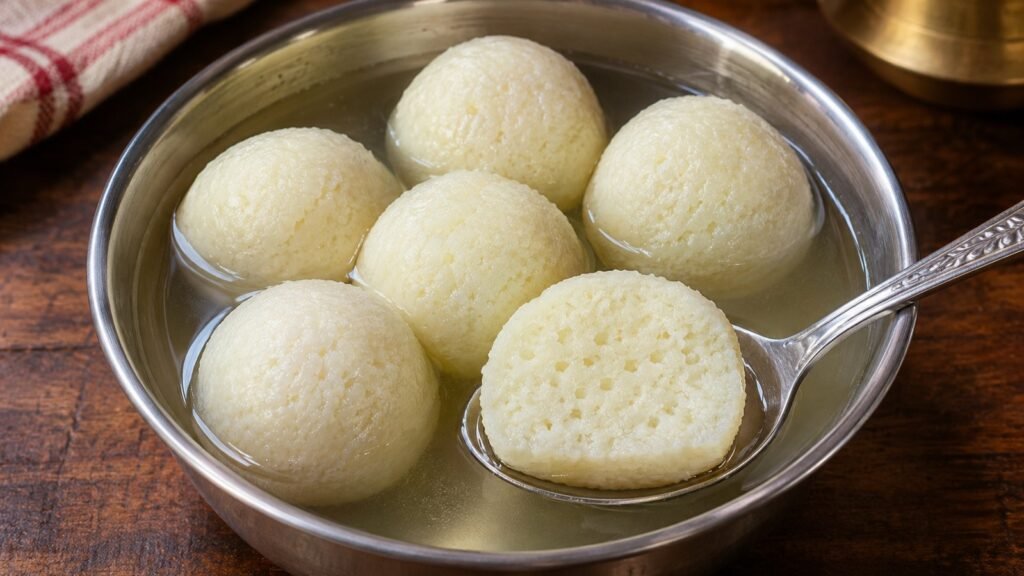
This soft rasgulla recipe shows you how to turn one litre of milk into spongy chenna balls soaked in a clear sugar syrup. The two details that matter most are how wet the chenna feels before you knead it and how steadily the syrup boils once the balls go in. Use the texture checks below to judge both.
Makes: About 16 small rasgullas. Active prep: About 20 minutes. Cook: About 20 minutes, plus draining and chilling.
Ingredients for homemade rasgulla
- 1 litre pasteurized whole cow’s milk
- 2 to 3 tablespoons lemon juice, diluted with the same amount of water
- 1½ cups white granulated sugar
- 4 cups water for the syrup
- 2 lightly cracked green cardamom pods, optional
You’ll also need a fine muslin cloth, a colander and a wide, deep pot with a lid. Use a pot with enough room for the balls to expand as they cook.
How to make soft, spongy rasgulla
- Curdle the milk. Bring the milk to a boil, then take it off the heat. Stir in the diluted lemon juice a little at a time until the curds separate and the whey looks pale greenish-yellow. Stop adding lemon juice as soon as you see clear separation.
- Drain and check the chenna. Strain through muslin and rinse briefly with cool drinking water to remove the lemon flavour. Gather the cloth and let it drain for about 20 to 30 minutes. Pinch a little chenna between your fingers. It should hold together when pressed and feel slightly moist, with no water dripping from it.
- Knead and roll. Smear the chenna across a clean plate with the heel of your palm, gather it, and repeat until the grains turn into a smooth, pliable dough. Begin checking after a few minutes. Stop when a small ball rolls smoothly with no visible cracks. Divide into roughly 16 equal portions and roll gently.
- Cook in thin syrup. Bring the sugar, water and optional cardamom to a rolling boil in the wide pot. Slide in the balls carefully, cover and maintain a steady boil for about 12 to 15 minutes. If the pot is crowded, cook in batches. The rasgullas should puff up and spring back gently when pressed with a spoon.
- Cool and chill. Turn off the heat. Let the rasgullas cool in their syrup without stirring, then transfer them and enough syrup to cover them into a clean container and refrigerate. Serve chilled, with a spoonful of syrup.
Why did my rasgulla turn hard, flatten or break?
| What happened | What to change next time |
|---|---|
| Hard or rubbery | Check the chenna sooner as it drains. Stop kneading as soon as it rolls smoothly. Boil the syrup only long enough to dissolve the sugar before adding the balls. |
| Balls broke apart | If the dough smears wetly or can’t hold a round shape, drain it a little longer. Knead away any coarse grains and roll out visible cracks. |
| Unevenly puffed or flattened | Roll equal-sized balls and give them room to expand. Let the syrup return to a steady boil after adding them, and leave them undisturbed as they cool. |
Making your first batch? Start with one ball. If it starts breaking as it boils, check the remaining dough for excess moisture or cracks before adding the rest. Compare the method with Swasthi’s step-by-step rasgulla guide for additional chenna and syrup cues.
Rasgulla recipe FAQs
Can I use store-bought paneer?
Make fresh chenna for this recipe. Firm paneer has already been pressed and can be difficult to roll into smooth balls with enough moisture to puff as they cook.
Is rasgulla the same as rasogolla or rasagola?
You’ll see several spellings used for this family of syrup-soaked chenna sweets. India’s official GI registry lists Banglar Rasogolla and Odisha Rasagola as separate registered regional products.
What other sweets can I make for the same gathering?
Make Assamese coconut ladoo without condensed milk for a sweet you can serve alongside the chilled rasgullas. For a warm option, try kholasapori pitha, an Assamese rice-flour pancake, or explore more ideas in the Assamese recipe collection.

