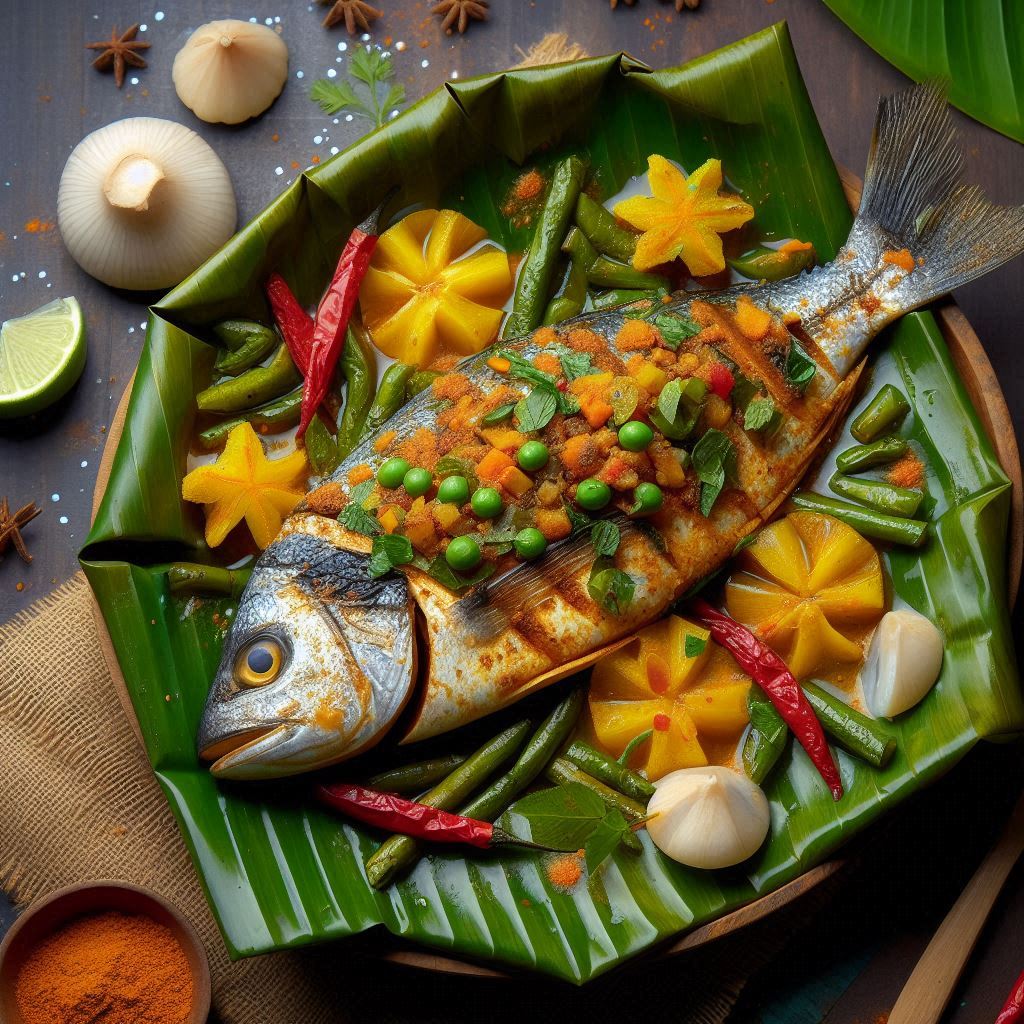
Patot diya maas brings fish, mustard and aromatics together in a banana-leaf parcel. This home-kitchen adaptation focuses on clear preparation and a thermometer check rather than a fixed cooking time.
Ingredients for two servings
- 2 portions of boneless fish, approximately 150 g each
- 2 clean food-grade banana-leaf pieces, large enough to wrap the fish
- 1 tablespoon prepared mustard paste suitable for your needs
- 2 teaspoons cooking oil
- A pinch of turmeric, optional
- Salt and chilli to taste
- A little water if needed to loosen the paste
Fish and mustard are allergens. Use ingredients appropriate to the people eating the dish. Check fish carefully for bones, especially when serving children.
Method
- Wash hands and prepare clean work surfaces. Keep raw fish separate from ready-to-eat ingredients.
- Mix mustard paste, oil, optional turmeric and seasoning. Coat the fish.
- Place each portion on a clean leaf and fold a secure parcel. If the leaf tears, use a suitable covered steaming dish rather than allowing the fish to fall apart over the heat.
- Steam the parcels in a covered steamer. Thickness, starting temperature and equipment affect cooking time.
- Open carefully to avoid steam burns and check the centre of the thickest portion with a food thermometer. Fish should reach at least 63°C (145°F).
- Serve with freshly cooked rice and vegetables if desired. Do not eat the wrapping.
Practical notes
The banana leaf is a cooking wrapper, not evidence that the dish is medicinal or “fat free.” This recipe includes oil. Choose serving sizes and accompaniments for your own needs rather than relying on a health label.
Refrigerate leftovers promptly and follow local food-safety guidance. Do not rely on aroma or the outside of a parcel to judge whether the centre of the fish is safely cooked.
Source
USDA: Safe minimum internal temperatures