
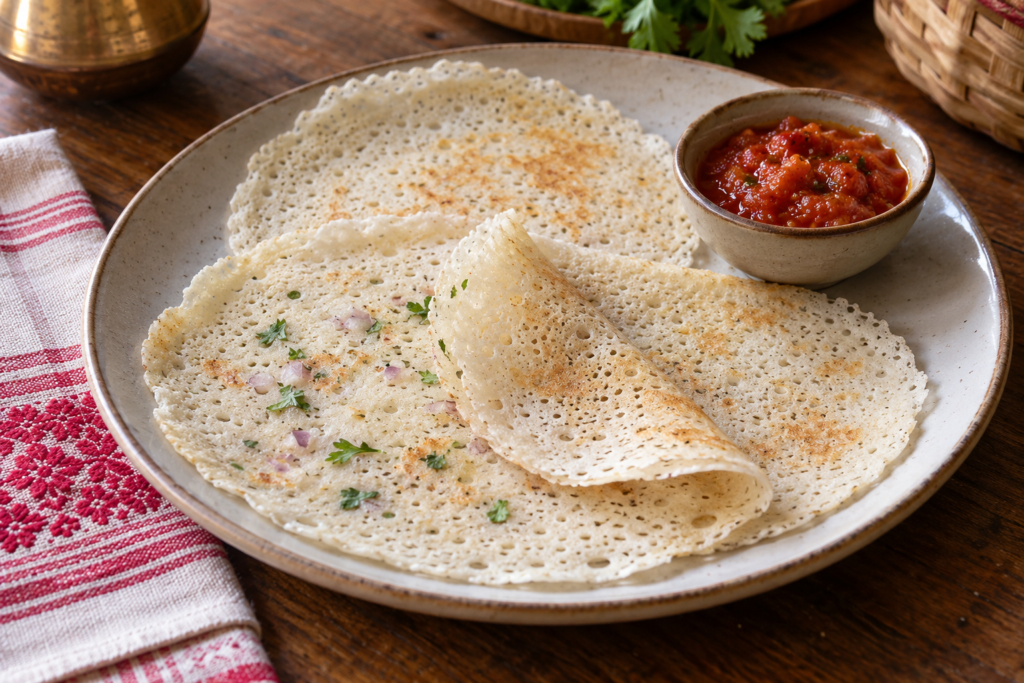
Kholasapori pitha is an Assamese rice-flour pancake cooked on a hot pan. The basic batter uses rice flour and water, with salt and a little oil for cooking. It can be kept plain or made savoury with finely chopped onion and herbs.
This simple home-style version focuses on the part that matters most: getting a pourable batter and allowing the first side to set before turning. Household recipes differ, and rice flour absorbs water differently, so use the quantities as a starting point and adjust the first small pancake.
Jump to the recipe · Fix common problems · Read the FAQs
What makes kholasapori pitha different?
Unlike a thick breakfast pancake, kholasapori pitha is relatively thin. The name is associated with the traditional earthen cooking plate, or khol; a suitable tawa or frying pan is a practical home substitute. You may also encounter the spelling khola sapori pitha.
ICAR’s rice-based recipe collection includes a savoury version with onion. The version below leaves unusual additions out and keeps onion optional so you can start with a plain batter. It uses no added sugar and does not require overnight fermentation.
Kholasapori pitha recipe
Serves: about 2, depending on sides and appetite
Yield: approximately 6 small pancakes
Preparation: about 10 minutes
Cooking: approximately 15–20 minutes in batches
Equipment: mixing bowl, whisk, ladle, flat spatula and a well-seasoned tawa or non-stick pan.
Ingredients
- 150 g fine rice flour, preferably weighed rather than tightly packed into a cup
- About 225 ml safe drinking water to start, plus small additions as needed
- ¼ teaspoon salt, or to taste
- About 2 teaspoons edible cooking oil for lightly greasing the pan; use more only if needed
- Optional: 2 tablespoons very finely chopped onion and 1 tablespoon chopped coriander
Flour note: this recipe is written for fine rice flour. Coarse flour and glutinous rice flour can behave differently. Check what you have before adding extra water or changing the cooking method.
Step-by-step method
- Mix. Whisk rice flour, salt and water until smooth. Add optional onion and coriander. Aim for batter that pours easily, rather than a dough.
- Prepare the pan. Heat over medium heat, then spread a thin film of oil over the surface.
- Make a small test pitha. Stir the batter and pour in a little. Spread gently into a thin circle, or tilt the pan slightly to help it flow.
- Cook and turn. Wait until the top is no longer wet and the edges lift. Loosen carefully, flip, and cook the other side until set with light golden spots.
- Adjust and repeat. If it is thick, add water by the tablespoon. Stir before each ladleful, grease lightly as needed, and serve warm.
Timings and yield are approximate, not a guarantee for every pan. Use the appearance of the pancake as your guide. Do not taste raw batter to check doneness.
Why is my pitha sticking, tearing or turning thick?
It sticks to the pan
Check the cooking surface first. A worn coating or an inadequately seasoned pan can make a delicate pancake difficult to lift. Apply a thin, even film of oil and let the pan heat before adding batter. Also resist trying to move it while the upper surface is still wet.
If the first attempt sticks, clean off the attached batter before starting the next one. A rough layer left behind can catch the next pancake too.
It breaks when flipped
Make the next pancake smaller and give the first side longer to set. Slide a broad spatula underneath rather than lifting one tiny edge. Large onion pieces can also interrupt a thin pancake, so chop optional additions finely.
If very watery batter breaks repeatedly, whisk in a small amount of rice flour and test again. Change one thing at a time so you can see what helped.
It comes out thick or heavy
The batter may be too thick, or you may be pouring too much into a small area. Add a tablespoon of water, stir thoroughly and use a smaller ladleful for the next test. Rice flour can settle while you cook, making later portions different from the first unless you stir.
It browns before the middle sets
Lower the heat and make a thinner pancake. A very hot surface can colour the outside quickly while leaving a thick centre undercooked. Avoid compensating by repeatedly adding oil.
What to serve with kholasapori pitha
Try a small portion of Assamese aloo pitika or tomato chutney for a simple plate. For a fuller meal, add dal and cooked seasonal vegetables. These are serving suggestions; use what suits the rest of your meal.
For breakfast inspiration with different rice textures, explore Komal Saul Jolpan. Our traditional Assamese food guide introduces more dishes to try.
Storage and reheating
The texture is best straight from the pan. If keeping cooked pitha, cool and refrigerate promptly in a covered container; do not leave cooked food at room temperature for more than two hours. WHO recommends keeping cooked and perishable food preferably below 5°C. Reheat thoroughly until steaming hot.
Make only as much batter as you need when possible. Keep prepared batter covered and refrigerated if cooking is delayed, rather than treating it as a batter that should ferment on the counter. Check dairy-based sides separately and keep them chilled.
Frequently asked questions
Do I need an earthen khol?
No. A suitable tawa or frying pan works for this home-style version. The condition of the cooking surface matters more than choosing an unfamiliar pan.
Does the batter need yeast or baking powder?
No. This version uses neither. It is meant to be a thin rice pancake, so you do not need to make it rise like a fluffy wheat pancake.
Can I make it without onion?
Yes. Onion and coriander are optional. Start plain if you want to learn how your flour and pan behave.
Can I use a different flour?
A different flour changes how the batter absorbs water and sets in the pan. Use fine rice flour for this version, then make a small test pancake before adjusting the batch.
Is this a high-protein breakfast?
Rice flour is the main ingredient, so this recipe should not be described as a high-protein meal without analysis. Choose accompaniments such as dal or plain curd if you want a more varied plate. Exact nutrition depends on the flour, oil, serving size and sides.
Sources and recipe notes
- ICAR–National Rice Research Institute: rice-based recipe collection — background for the rice-flour pancake method; the quantities and optional additions here are a home-style adaptation.
- WHO: Five keys to safer food — preparation, refrigeration and reheating guidance.
Featured image: AI-generated illustration of a serving suggestion. This recipe has not been independently kitchen-tested by Nutritional Growth; adjust batter and cooking time to your flour and pan.

