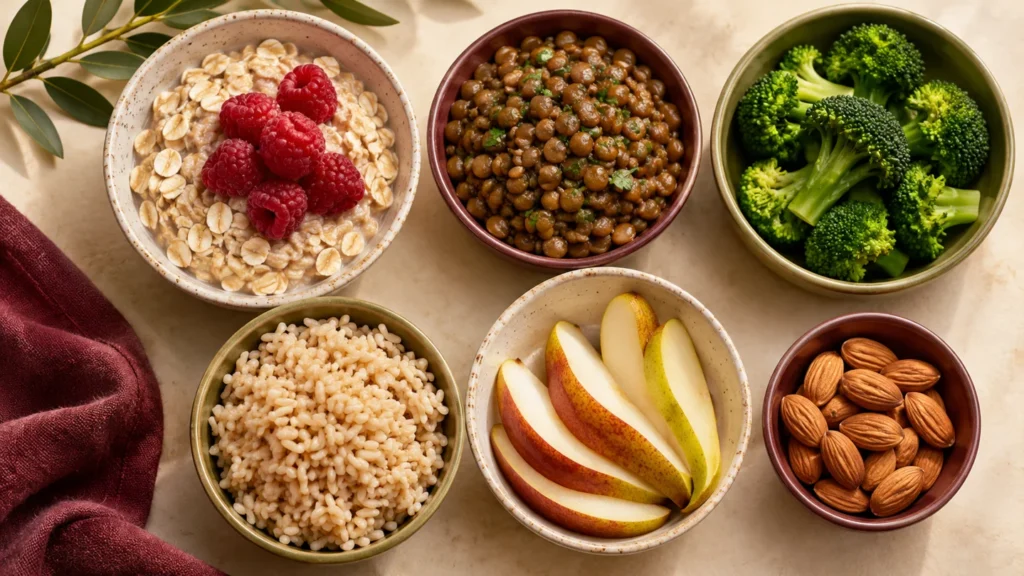
You can get about 25 grams of fiber a day by spreading it across meals. Try oatmeal with raspberries for breakfast, cooked lentils at lunch, a pear with almonds as a snack, and broccoli with brown rice at dinner. The portions below show how that adds up using everyday foods.
What does 25 grams of fiber look like?
| Meal | Foods and portions | Fiber |
|---|---|---|
| Breakfast | 1 cup cooked oatmeal and ½ cup raspberries | 8 g |
| Lunch | ½ cup cooked lentils, served in soup, dal, or a grain bowl | 8 g |
| Snack | 1 medium pear with the skin and ½ ounce (14 g) almonds | 7 g |
| Dinner | ½ cup cooked broccoli and ½ cup cooked brown rice | 4 g |
| Total | Fiber from the foods listed | About 27 g |
These are the fiber-rich parts of each meal. Round out your meals with the foods and portions that suit your appetite and energy needs. The estimates are rounded and vary with the food variety, brand, and preparation. Use the U.S. dietary fiber food table and MedlinePlus’s high-fiber food guide as references.
How much fiber do adults need?
The World Health Organization’s healthy diet guidance recommends at least 25 grams a day of naturally occurring dietary fiber for adults. National guidelines can set different targets. For example, the UK’s NHS gives a target of 30 grams a day for adults. The example above shows how to reach the WHO benchmark with food.
High-fiber swaps for meals you already eat
- Breakfast: Add berries or chopped pear to oats. Frozen berries work when fresh ones are expensive or out of season.
- Lunch: Add cooked lentils to vegetable soup or black beans to a rice bowl. If you use canned beans, check the serving size on the label when comparing fiber values.
- Snack: Choose a whole pear or apple with the edible peel. Pair it with a small handful of almonds if you like.
- Dinner: Try brown rice, whole-wheat roti, or another whole grain you already cook. Add vegetables such as broccoli, peas, or carrots.
For more ideas to use with your own meals, browse Nutritional Growth’s Recipe Diaries.
How to increase fiber gradually
Start with one change you can repeat, such as adding a piece of fruit to breakfast. Once that feels comfortable, try adding a small portion of lentils or beans at lunch. The U.S. National Institute of Diabetes and Digestive and Kidney Diseases recommends increasing fiber gradually and drinking enough fluids. If you’ve been prescribed a low-fiber diet, follow the target your clinician gave you.
Frequently asked questions
Can I get 25 grams of fiber without supplements?
Yes. Oats, lentils, whole fruit, nuts, and vegetables can get you there. Use the sample day as a starting point and substitute similar foods that fit your budget and tastes.
Do canned beans and frozen berries count?
Yes. Both can contribute fiber. Compare the amount per serving on packaged foods, since portion sizes can differ between brands.
How can I track fiber without counting every meal?
Estimate the fiber in one typical day using food labels or a food composition table. Once you know which foods contribute the most, build a few repeatable meals around them.