When you see no added sugar on a food label, the claim is about how the product was made. It can still contain naturally occurring sugars, such as lactose in plain yogurt. Sugar-free is a claim about how much sugar the finished product contains. The exact limit depends on where the product is sold.
No added sugar vs. sugar-free at a glance
| Claim | What it tells you | What to check |
|---|---|---|
| No added sugar | The product meets local rules for making a claim about sugars added during processing. | Look at total sugars for a fuller picture. Plain yogurt and 100% juice can still contain sugars. |
| Sugar-free | The finished product meets a very low limit for sugars under local rules. | Check total carbohydrate, serving size, and any sweeteners listed in the ingredients. |
What does no added sugar mean?
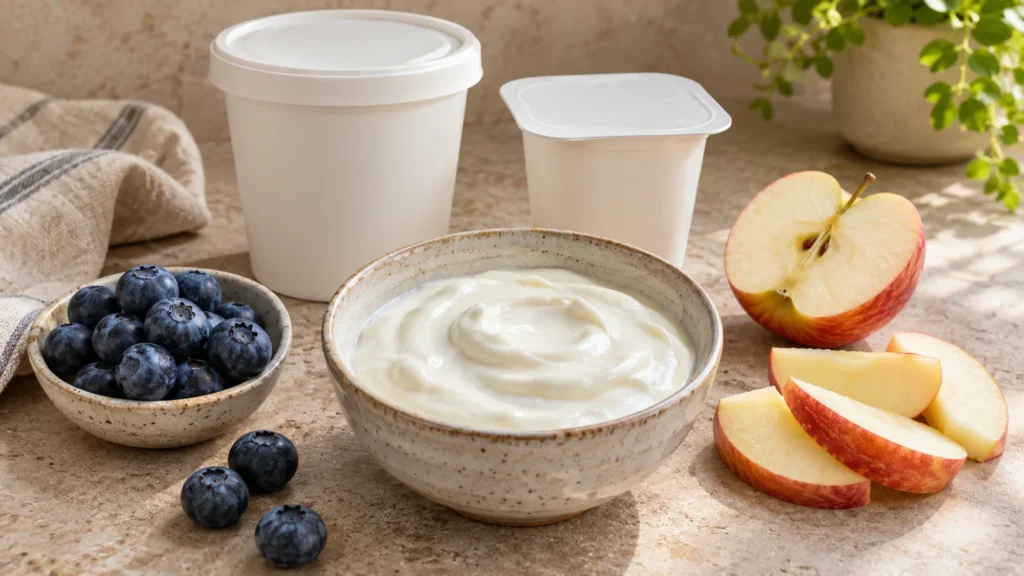
The claim can appear on products that naturally contain sugars. For example, plain yogurt can contain lactose from milk. On a U.S. Nutrition Facts label, the line for added sugars sits under total sugars. If a yogurt lists 6 g total sugars and 0 g added sugars per serving, those figures describe different things. The 6 g is the total amount of sugar in that example.
The EU also restricts the use of ingredients used for their sweetening properties when making the claim. If the food naturally contains sugars, the label must indicate that. See the European Commission’s guide to nutrition claims.
What does sugar-free mean in the U.S. and EU?
In the U.S., the sugar-free claim generally requires less than 0.5 g of sugars per labelled serving and per reference amount customarily consumed. In the EU, the limit is no more than 0.5 g per 100 g or 100 mL. That difference matters when comparing imported products. Start by checking whether the numbers are given per serving or per 100 g or mL. See the U.S. FDA summary of nutrient content claims and the European Commission’s sugar claim thresholds.
How to compare two products in the supermarket
- Match the quantities. If two yogurt tubs list different serving sizes, compare the values for the same amount. A per-100-g column makes this easier when available.
- Read the line that answers your question. To compare all sugars, use total sugars or the equivalent on your local label. To compare sugars added during processing, use the added sugars line where it appears.
- Check the ingredients. Look for sweetening ingredients such as honey, syrups, or sugar. If you want to know whether a sugar-free product uses sweeteners, read the ingredient list.
- Compare the rest of the label. For yogurt you might also look at protein. For a breakfast cereal or snack, fiber can help you compare options. See our guide to getting 25 grams of fiber with everyday foods for practical examples.
Frequently asked questions
Can no-added-sugar juice still contain sugar?
Yes. Juice can contain sugars from the fruit. Read total sugars and the serving size to see how much the label lists for the amount you drink.
Does sugar-free mean carbohydrate-free?
Sugar-free refers to sugars. A product can still contain other carbohydrates, such as starch or sugar alcohols. Check the total carbohydrate line if that is what you need to compare.
Can a sugar-free product still taste sweet?
Yes. Some products use sweeteners. If you want to know how a specific product is sweetened, check its ingredients.