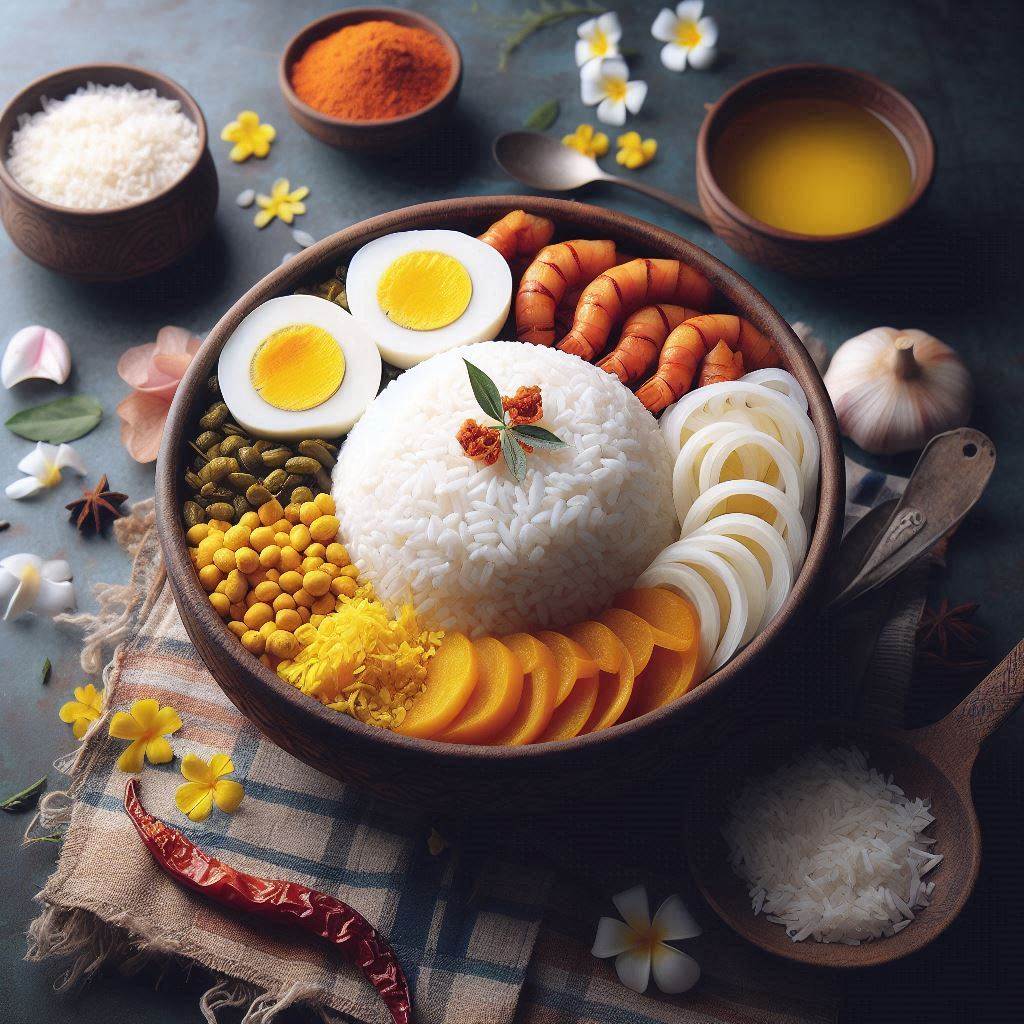
Poitabhat, also written poita bhat, is associated with rice, water and simple accompaniments in Assamese food culture. Traditional descriptions often refer to rice left to ferment overnight. Describing that tradition is different from recommending uncontrolled room-temperature storage at home.
Why the storage method matters
Cooked rice can become unsafe when left at room temperature. Cooking does not eliminate every risk from bacterial spores. A sour taste or reheating is not a reliable way to establish that improperly stored rice is safe.
A chilled alternative for home kitchens
For a rice-and-water style meal, use promptly chilled cooked rice instead of deliberately leaving rice out overnight to ferment. This is a refrigerated adaptation, not a claim to reproduce traditional fermentation.
- Divide freshly cooked rice into small portions so it cools quickly.
- Chill as quickly as possible, ideally within one hour, and refrigerate.
- Use within 24 hours. Keep refrigerated until serving.
- Use safe drinking water and clean serving utensils.
Do not use rice that has already been left out overnight. The Food Standards Agency’s advice also says to reheat rice no more than once and ensure it is steaming hot throughout.
Serving ideas
Serve a small portion alongside freshly prepared vegetable pitika or another dish your household enjoys. Keep accompaniments separate until serving, prepare only what you need, and account for allergies and any personal dietary restrictions.
What this article does not claim
This recipe tradition does not establish guaranteed probiotic benefits, immune protection, weight loss or a treatment for digestive problems. This page offers cultural context and safer storage guidance rather than a validated fermentation method.
Source
Food Standards Agency: Home food fact checker, rice guidance