Two breakfast cereals can look nearly identical on the shelf. Turn them around and you might find that one starts with whole oats and the other starts with a refined grain. Even then, the two boxes may list different serving sizes. Learning how to read ingredient lists is most useful when you pair the list with the Nutrition Facts panel.
Here’s a 30-second method for comparing cereal, yogurt and granola using labels sold in the United States.
1. Scan the ingredients in order
On a U.S. food label, ingredients generally appear in order by weight, starting with the ingredient used in the greatest amount. For a grain-based breakfast, look for specific names such as whole oats or whole wheat. For plain yogurt, milk and cultures are the ingredients you’d expect to see.
Look farther down the list for sweeteners such as cane sugar, honey, maple syrup or brown rice syrup. When several sweeteners appear, check the Added Sugars line to see their combined contribution per serving.
2. Compare the same amount of food
Look at the serving weight in grams before comparing numbers. Here’s a hypothetical example you can use in the aisle.
- Cereal A contains 5 g of added sugars in a 30 g serving.
- Cereal B contains 6 g of added sugars in a 45 g serving.
For the same 30 g portion, Cereal B contains 4 g of added sugars (6 × 30 ÷ 45). In this example, the product with the higher number on the front-facing serving comparison has less added sugar at equal weights. Use the same arithmetic for fiber or protein when those are your priorities.
3. Check “Includes Added Sugars”
Total Sugars includes naturally occurring sugars and added sugars. On a U.S. Nutrition Facts label, the line under Total Sugars tells you how much added sugar the serving contains. For example, a plain yogurt can list Total Sugars from lactose even when the Added Sugars line shows 0 g.
The FDA considers 5% Daily Value or less low and 20% or more high for added sugars per serving. This percentage helps when you compare products with similar serving sizes.
What to check by breakfast food
- Cereal. Look for a named whole grain, then compare fiber and added sugars at equal serving weights.
- Yogurt. Compare plain and flavored versions of the same style. Check added sugars and protein side by side. Try our guide to choosing yogurt with less added sugar for examples.
- Granola. Compare the serving weight with the amount you normally pour. If you use it as a topping, check values for your own portion.
A simple breakfast to try
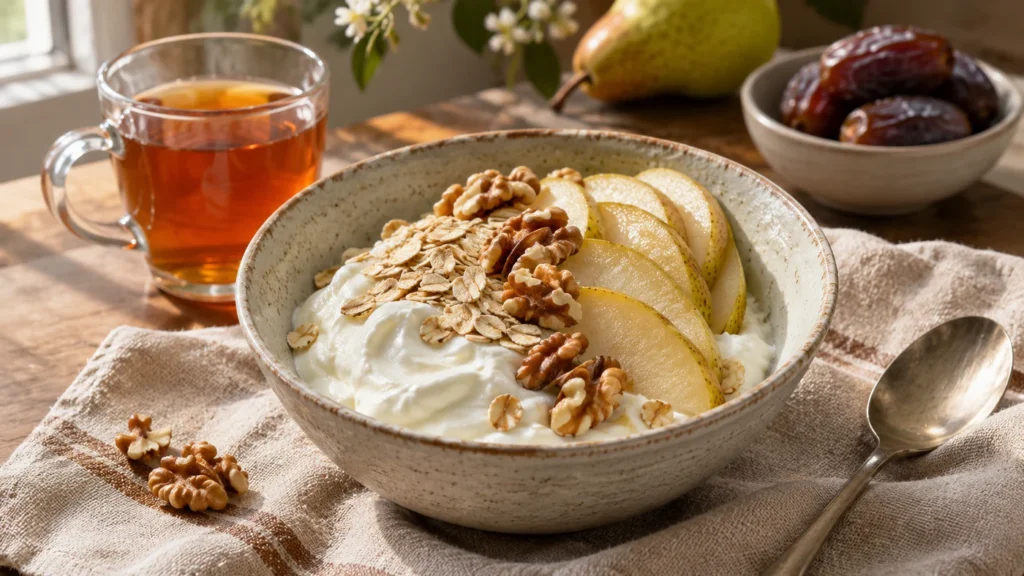
Start with plain yogurt, stir in rolled oats, and add sliced pear and walnuts just before serving. For a make-ahead version, try our Greek yogurt overnight oats. If you’re comparing package claims, see our guide to no added sugar and sugar-free labels.
Read the FDA’s guides to ingredient lists and added sugars on the Nutrition Facts label.